Friday, July 9, 2010

More on the non-appointment of Jeffrey John

The arcane world of Church of England politics is beyond my realm, and apparently beyond the realm of the British media that covers it. Here is more on the non-appointment of Jeffrey John as a bishop:

Jeffrey John was not the favourite

The stories about Jeffrey John's nomination as bishop of Southwark are mischief-making based on ignorance
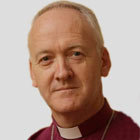

So, the Dean of St Albans has been "blocked" from becoming the next Bishop of Southwark. Really? Well, the Telegraph has confidently told us so – so we might as well remove our brains and take their word for it. Or not.

What is amazing about this whole story is not just the shameful behaviour of the leaker (who has sworn an oath of confidentiality), but the credulity of many people who have responded (look, for example, atThinking Anglicans) is depressing. They have accepted the details and language of the story without thinking. And, predictably, the usual suspects from the extremes of the Church were ready with their quotes of indignation and threat.

The Telegraph story last Sunday stated that the candidate concerned was on the shortlist; was the "understood to be the favoured candidate" and suggested that the process was only about him: would he or would he not be appointed? Readers were clearly intended to make certainuncritical leaps of logic that defied the realities of the process. Apparently, being on the shortlist meant that the named candidate was likely to get the appointment; so, if he was not appointed, it could only be that he was deliberately blocked by the Archbishop of Canterbury; oh, and the reason for the "block" could only be the candidate's sexuality.

However, thirty seconds of critical thought would have immediately raised questions about the presentation of the story. The process for nominating diocesan bishops can be studied on the Church of England website (which begs the question why so many commentators condemn the process as "unfit for purpose" or "arcane" before admitting they don't know how it works).
Basically, it works like this:

Each diocese elects a Vacancy-in-See Committee which only convenes if and when the current diocesan bishop resigns or retires. This committee convenes twice once the outgoing bishop has gone: once to draft the Diocesan Profile and Statement of Needs (who are we and what do we think we need in the new bishop?) and a second time to agree this paperwork and elect six members to join the Crown Nominations Commission (CNC).

The CNC is made up of the six diocesan representatives and six elected from the General Synod. The former serve only for the appointment in their diocese; the latter serve on a rotational basis for each vacancy that comes to the CNC. Also on each CNC are the two Archbishops, and the CNC is serviced by the Archbishops' Appointments Secretary and the Prime Minister's Appointments Secretary.

Names can be submitted by anyone. Yes – anyone. Members of the CNC can nominate people and a long list of between 12-15 names is assembled. Thorough paperwork on and from each candidate is collated for the CNC members.

The CNC meets once to discuss the Profile and gets the list down to half a dozen or so candidates. Some weeks later the CNC resumes for a twenty-four hour meeting from which the name(s) emerge. The name(s) are submitted to the Queen via the Prime minister for approval.

What this demonstrates is the fallacy of much of the language of the original story. For example, it is not possible to have a "favoured candidate" when there are six or so and there is no mechanism for establishing a "frontrunner" The point of a shortlist is that there are six "frontrunners"'

Anyway, what does it mean to speak of a "favoured candidate"? Favoured by whom and according to which criteria? Bishoprics aren't prizes for star personalities; they are demanding leadership posts for which there are more competent people around than there are posts.

If a particular candidate does not emerge as the one to be nominated, it is probably because on balance they are not thought to be the person who best fulfils what the diocese said they wanted or needed in their paperwork. The reasons why a candidate is not nominated will be plenty. So, to speak of one candidate being "blocked" is ludicrous. The process is not about the career desires of particular people or the vicarious ambitions of those who promote their cause (even against their will).

If one candidate was "blocked", then so were half a dozen others. Or, in fact, over a dozen whose names were considered in the process. Or, in fact, those whose names were submitted, but never got onto the longlist.

The process was about the Diocese of Southwark and its need for a particular shape of person as bishop. It was not about a particular candidate or flag-waving for particular causes – whatever the media want us to believe.

Nick Baines, as Bishop of Croydon, is writing here about the process for choosing his own boss

Thursday, July 8, 2010

Church of England might get first openly gay bishop -- or not

We've been keeping an eye on this developing story the last two days. It seems that the Church of England was about to get its first openly gay bishop, Jeffrey John, (photo at right), when word leaked and Rowan Williams, archbishop of Canterbury, intervened to stop it tonight.

Keep in mind that the Prime Minister of Great Britain picks the bishops in that country, and the new prime minister, David Cameron, is decidedly friendly to gay rights. The P.M. may still go ahead with this. Here is the story from the U.K. Guardian:

Rowan Williams, the archbishop of Canterbury, is embroiled in a new crisis within the Church of England over the decision to block the appointment of a gay cleric as bishop of Southwark.

Liberals and mainstream Anglicans are furious that the archbishop has once more failed to exert any leadership over mutinous forces threatening to split the church over the sensitive issue of homosexuality.

Dr Jeffrey John, the dean of St Albans, was in the running for the senior position at Southwark until his name was leaked, enabling conservative clerics to stop the appointment. An embattled Williams has now launched an inquiry at Lambeth Palace to find out who divulged the name .

The archbishop was appalled that John's name was disclosed in a successful attempt to derail his candidacy, exactly seven years after he was forced to stand down as the prospective bishop of Reading following a previous outcry by conservative evangelicals against John's sexuality. Fingers are being pointed at the same evangelical hardliners who orchestrated the 2003 campaign.

The theologian, who is now dean of St Albans and has entered a civil partnership with another clergyman, his partner of many years, has long maintained that the relationship is chaste and thus complies with Church of England rules for its gay clergy.


To read the rest of the story, click HERE.

Wednesday, July 7, 2010

New Associate Rector for Young Adult Ministry called

Dear Friends of St. Paul’s,

It gives me great pleasure to announce that I have called The Rev. Nicholas Forti to be our Associate Rector for Young Adult Ministry. I am very excited to have Nik join our ministry team. The Vestry has concurred in this calling, and we expect final approval soon from Bishop Shannon Johnston and the Diocese of Virginia.

Nik is a recent graduate of the Virginia Theological Seminary. His wife, Eleis, is a recent graduate of St. John’s College in Annapolis. Nik is currently a transitional deacon, and we expect his ordination to the priesthood in about six months.

In his full-time associate rector position, Nik will be primarily responsible for shepherding our vibrant teenage youth group and our University of Virginia student ministries, particularly our Canterbury Fellowship program. He will be the principal liturgical leader at our 5:30 pm worship service, working with students, musicians and others.

Nik has a strong background in both of the ministries that are the focus of his position. Nik grew up in Richmond, then went to Radford University, and lived in the Canterbury House at Radford. As an undergraduate, Nik began exploring his calling to the priesthood. After graduation, Nik was the paid youth lay minister for a teen youth group at a church in Richmond; he built a Journey to Adulthood (J2A) program from the ground up, including leading youth on a spiritual pilgrimage to Scotland. He was accepted into the ordination process in the Diocese of Southern Virginia.

At seminary, Nik completed two years of field education (internship) in campus ministry at the University of Maryland; he is very enthusiastic about leading university ministry and working with students.

Eleis also grew up in Richmond, and she and Nik went to the same high school (several years apart). Eleis hopes to be involved in our social justice ministries, including PACEM, and assisting with the dinners for students on Sunday evenings. She will be studying for admission to law school.

They will both be at Shrine Mont this weekend, and I will formally introduce them to the congregation on Sunday July 18 at all three of our regular worship services (and Nik will be preaching).

Please join me in welcoming Nik and Eleis to Charlottesville and St. Paul’s.

Jim+

Tuesday, July 6, 2010

Prayer is a gift of the Spirit: "Speak to your heart upon your bed."

The readings from yesterday's Daily Office spoke to me, and so I'd like to share some of my meditation from yesterday.

First, there was Paul Letter to the Romans 8:26-30:
"The Spirit helps us in our weakness, for we do not know how to pray as we ought, but that very Spirit intercedes with sighs too deep for words."
There are many times I do not know how to pray, when the words don't come, when my mind wanders to my To-Do list and my church tasks for the day.

It helps me to know that prayer is a gift, and the words -- the insights -- of prayer are truly from God's grace. It helps me to know all that so that I don't worry that my prayer is somehow not good enough.

There are people who seem so great at prayer, and I can feel inadequate by comparison. Thomas Merton and Julian of Norwich I am not. But if prayer is a gift of the Spirit, then prayer is not a competition. I don't have to be Thomas or Julian. I can fret about many things, but prayer should not be one them.

Yet, that brings me to a related question: How honest am I allowed to be in my prayer? Yes, I pray for others, but may I pray for myself? How do I pray for myself? Do I put my selfish desires and my deepest anxieties on the table with God? Do I say what I really want? Should I be bothering God at all with any of this?

I am helped by Psalm 4 from Evening Prayer last night: "Speak to your heart in silence upon your bed."
"Answer me when I call, O God, defender of my cause; you set me free when I am hard-pressed; have mercy on me and hear my prayer..."
One other thought came to me in yesterday's meditations, and it is more implicit than explicit within the readings of the day. Many passages of the Bible seem to suggest God is the cause of both good and evil, like when God "hardened the heart of Pharaoh" so that plagues would be unleashed and so proving God's might. That is not an image that sets well with me about God; this image of God is not anyone I would want to trust.

There is another way to see this:

If prayer itself is a gift of the Spirit, as Saint Paul teaches, that suggests to me that God is present everywhere and in everything; in every word and action, in every person, in every molecule of the universe, in every moment both good and evil. God is present in every prayer no matter how flawed I am in my prayer.

That also suggests to me that God is dwelling with me in both the good times and the bad; is with me when I am noble and when I am selfish, when I am strong and when I am weak. God is with me in the joyful and the bleakest moments, at the dawn and at the dusk; and God reaches each one of us even into the depths of hell itself.

God is especially with me in my prayers; God brings me the words I cannot quite find for myself. The question for me is whether I can sit still long enough to hear the prayers that come from my heart upon my bed.

That also suggests that God is capable of hearing every prayer, in every language, from every heart, from every religion. Prayer can come with words, or in art and music, in every sense of our being -- or in pure silence.

Humans have limits and religions have limits. But God has no limits; there can be no limits to the prayer God can hear. God can perfectly well read Tibetan Buddhist prayer flags and hear the chants of a Muslim imam or a Jewish cantor, or see the illuminations of a Bible transcribed by a Cistercian monk, or hear the inspiration of "inner light" by a Quaker, or listen to the "Prayers of the People" from an Episcopalian. God can sort it out.

I always seem to arrive back at my favorite psalm. Even though it is not assigned for the day,
I leave you with this:
Psalm 139
Domine, probasti

1 LORD, you have searched me out and known me; *
you know my sitting down and my rising up;
you discern my thoughts from afar.

2 You trace my journeys and my resting-places *
and are acquainted with all my ways.

3 Indeed, there is not a word on my lips, *
but you, O LORD, know it altogether.

4 You press upon me behind and before *
and lay your hand upon me.

5 Such knowledge is too wonderful for me; *
it is so high that I cannot attain to it.

6 Where can I go then from your Spirit? *
where can I flee from your presence?

7 If I climb up to heaven, you are there; *
if I make the grave my bed, you are there also.

8 If I take the wings of the morning *
and dwell in the uttermost parts of the sea,

9 Even there your hand will lead me *
and your right hand hold me fast.

10 If I say, "Surely the darkness will cover me, *
and the light around me turn to night,"

11 Darkness is not dark to you;
the night is as bright as the day; *
darkness and light to you are both alike.
Top, Islamic calligraphy, "Meditations on the Veil," by Nazar Yahya (1963-); middle, Tibetan prayer flags; bottom, Psalm 79, from illuminated Jewish Haggadah, German, 14th century.

Monday, July 5, 2010

The Monday Funnies

We haven't had a Dave Walker cartoon in awhile, or jokes from Patrick Hill.

In fact, we haven't had the Monday Funnies in awhile. Here's some jokes from Pat and a new cartoon from Dave. Enjoy your Monday. . .

INCREASING SUMMER ATTENDANCE IN CHURCH

10. Have your preacher preach from a Dunk Tank!
9. Offer free samples of "Hellfire and Brimstone" BBQ sauce to every new visitor.
8. Add a slide to your baptistery and advertise the church as a water park!
7. Offer a free tank of gas for every five sermons heard!
6. Convert your parking lot into an RV Campground!
5. Convert the sanctuary aisles into putting greens!
4. Replace your church sign with one that reads: "Tourist Information"!
3. Have deacons dress up in animal costumes and open a petting zoo!
2. Put up road blocks and tell people there's a manhunt going on!

And the number one way to boost church attendance during the summer is:
1. Be there yourself!

Sunday, July 4, 2010

Independence Day and moral courage for our times

I haven't been in the pulpit in several weeks, so what better day to return than the Fourth of July? Today we are using the readings for Independence Day: Deuteronomy 10:17-21, Matthew 5:43-48, Psalm 145 or 145:1-9

Here is my sermon for today:

* * *

When I think of church, I usually think of blessings, and I hope you do too. But the ancient sages would tell you there is another side to this:

Curses.

And curses can be instructive.

There is an old Chinese curse that Robert Kennedy was fond of quoting. The Chinese curse is this: “May you live in interesting times.”

“May you live in interesting times.”

We certainly live in interesting times, and we certainly can, if we chose, see it as a curse. On this Independence Day, our nation is at war in the Middle East and Central Asia; our economy is in its deepest slump since the Great Depression of the 1930s.

Our environment is under assault in the air, and on the land, and in the sea. We have witnessed the calamity of the worst oil spill in history, driven by our addiction to cheap energy, and the calamity continues at this moment.

Our government sometimes seems adrift and out-of-touch, or paralyzed by partisan gridlock and media-driven extremism.

We live in interesting times.

We live in a time of great change, and that change impacts everything we do, every place we go, touching everyone we meet.

Children grow up and graduate, or don’t. Some of you face health issues, or a job change, or retirement.

Some of you are facing the loss of a loved one. The only thing inevitable in life is change.
Ours is not the first generation to live in interesting times or face relentless change.

Robert Kennedy, in 1966, in a speech in Capetown, South Africa, talked about the challenges of interesting times:

“They are times of danger and uncertainty; but they are also the most creative of any time in the history of mankind.”

Kennedy, who came to South Africa to lift up those, who at great personal risk to themselves, opposed apartheid, went on to say there is a quality above all other qualities needed during interesting times: Moral courage.

Kennedy said moral courage is in shorter supply than “bravery in battle or great intelligence.”
Moral courage is the strength of character that motivates someone to stand up and be counted precisely when it hardest to stand up.

Moral courage is that quality that says the conventional wisdom is not always right, that the action of one person can make a difference, especially when no one else thinks it possible, and especially when it matters the most, especially in interesting times.

And Robert Kennedy said this:

“It is from numberless diverse acts of courage and belief that human history is shaped. Each time a man stands up for an ideal, or acts to improve the lot of others, or strikes out against injustice, he sends forth a tiny ripple of hope, and crossing each other from a million different centers of energy and daring those ripples build a current which can sweep down the mightiest walls of oppression and resistance.”

On this Independence Day, it is moral courage that I especially want to celebrate.

Those who founded this nation lived in interesting times. They were told they could not win against the greatest superpower on earth, Great Britain. They did not always have moral courage, they faltered when it came to slavery.

But they had enough moral courage to prevail against Britain, and enough moral courage to shape a nation that is still young, still unfinished, still very much in need of moral courage.

You may not know this, but Independence Day is an official feast day of the Episcopal Church. Our church was founded in the tumult of the American War for independence.

And what better place to celebrate this feast day than here, at St. Paul’s Memorial Church, across the street from the great University founded by the author of the Declaration of Independence, Thomas Jefferson, and shaped by other founders of this nation especially James Madison.

Jefferson was 32 years old when he penned the Declaration, and today we celebrate not just our independence but also the moral courage of Jefferson and those he stood with on that 4th of July long ago.

We live in interesting times. We live in a time when moral courage is needed as never before.
Here is the thing about moral courage:

Sometimes moral courage comes in a huge moment for the entire world to see, as with George Washington at Valley Forge or Martin Luther King at the Selma bridge.

And sometimes – maybe most of the time – moral courage comes in the accumulation of small moments, in our daily life and work, and in places that don’t make headlines, and with people who are not celebrities.

Those moments have come right here in this church, like when Ted Evans, the rector of St. Paul’s, had the moral courage to stand up in the 1950s and declare that this parish – St. Paul’s Memorial Church – would not cooperate with a scheme to use churches in Charlottesville to educate only white children.

He paid a price in the community and with his bishop but Ted Evans stood his ground.

And some of you here today had the moral courage to stand with him, and to you we owe a debt of gratitude.

Those moments of moral courage continue here in this place today, and you are changing the world one rippled at a time. It all adds up.

Some of you are doing research on global warming or unlocking the mysteries of retroviruses. Some of you care for the sick, or teach our young people, or work in a day care center, or a soup kitchen or food pantry, or in our community garden as a volunteer, or you volunteer with Habitat for Humanity, or IMPACT or PACEM or The Haven.

Some of you work in your home or in a job to support your family. Some of you own a business that provides services and jobs in our community. Every one counts, everyone can have moral courage in every walk of life.

A way to measure our moral courage can be found in our biblical lessons today, the lessons that are assigned by the Episcopal Church specifically for Independence Day.

The lessons speak to having the moral courage to care for the poorest among us, the widows and orphans and immigrants. “You shall also love the stranger, for you were strangers in the land of Egypt,” the Deuteronomist proclaims.

The psalmist tells us that greatness comes through compassion and kindness, not anger and violence.

And Jesus puts it squarely on the line: “Love your enemies and pray for those who persecute you.”

Strength comes not with force of arms but in the forgiveness of enemies, in protecting the vulnerable and in compassion for immigrants.

If I may add a personal note: My father fought in World War II, in the South Pacific, and he saw terrible things. He believed this country worth defending and he put his life on the line for that. Yet he taught me from a very young age that true patriotism is not about military might, but is about participating as a citizen, voting, paying taxes, getting involved in the community, making a difference.

Each time we live this way, each time we stand with the least among us, with the oppressed and forgotten, we bring the Kingdom of God a few steps closer, and we come a little closer to becoming fully the human being God would have us be.

It takes moral courage to live this way, and yet this I also know:

Within you is the fiber of moral courage because God put it there when you were born.
Moral courage ultimately comes as a gift of faith, in our hope for a better world unseen, a world we are partners in creating.

So on this Independence Day, may each of us have the strength and moral courage to be the hands and feet of Christ, and may these interesting times be not a curse but a blessing to us, and to those who come after us. AMEN

Photo of James Armstrong, who carried the flag across the Edmund Pettes Bridge in Selma, Alabama, in 1965, reenacting "Bloody Sunday" in 2005. Mr. Armstrong died in 2009. Photo in the Birmingham News.

Friday, July 2, 2010

On our way back from away

We have been away the last few weeks. Mostly Lori and I have been reconnecting with friends and family in California. We've shared many meals, many laughs, hiked in the Sierra, fished in the Truckee River, walked on a fabulous beach at Asilomar, and rode cable cars in San Francisco. I've returned to my old haunts to open the state Senate in prayer, went to a Mumbo Gumbo concert and a River Cats baseball game, drank wine in Napa Valley, and was blessed by a living saint, Roman Catholic Bishop Francis Quinn. We've also shared in the deep sadness in a courtroom at the sentencing of two men convicted in the murder of a young dear friend and blessed the house where he was killed.

Today we are winging our way back to Charlottesville, ready for the next chapter in our new home with our new friends. Please pray that the angels will give us traveling mercies this day.
-- Jim & Lori

Wednesday, June 30, 2010

The Anglican Covenant and other voices not my own

I have not commented a great deal, at least directly, on the proposed "Anglican Covenant" that would, if enacted, bring about a more formal structure to our very shaggy Anglican Communion. Part of my reluctance to comment is I've read the drafts and find them overly complicated, a lawyer's dream if you will.

Moreover, I am among those who are suspicious of creating a de-facto magisterium of archbishops and bishops. I have enough of an American independent streak to be wary of tying my local parish's fate too closely to the whims of committees and prelates far from our shores (see my posting from last week on this topic HERE).

Moreover, the direction the church should be going generally should be to flatten hierarchy and create more local autonomy. The creeds and the Chicago-Lambeth Quadrilateral of 1888 are good enough for me.

And yet. . .

I also profess to be a priest whose orders are embedded in the historic Anglican Communion and the wider apostolic succession within the catholic (universal) faith. I am not just a local priest. My parish is not just a local non-profit organization. I am wary of selfish individualism and narcissistic autonomy. I am definitely not a congregationalist; I am suspicious of professions of redemption that are entirely focused on individual salvation. I believe our salvation depends entirely on the grace of God in Christ, and we are therefore all connected through God in Christ. We are people of the covenant, beginning with Abraham and Sarah, Jacob and Rebecca, Moses and Zipporah, and extending through to the "New Covenant" proclaimed by prophets and incarnated by Jesus Christ. We live free by covenanting to live within community by putting boundaries on our freedom. We come to the Promised Land together, not autonomously.

And yet. . .

I am much turned off by those voices for the "Anglican Covenant" who really seem to be looking for a way to gild their own bigotry against gays and lesbians and women in the priesthood, and justify a grab bag of other prejudices. They speak of covenant but their covenant seems only to exclude. They speak of sin but see not their own hateful ways and words. They weaponize the Bible much as an earlier generation used the Bible to justify slavery and segregation. They are part of an old shameful story; they are the Tea Party at prayer. My skin crawls when reading commentaries by David Anderson, a self-appointed bishop of the whacky right-wing American Anglican Council. My skin crawls when reading some of the snarky comments left on my own blog. I am mystified at the continuing appeasement by Archbishop Rowan Williams toward this crowd.

And yet. . .

I promised to bring you voices from around the Communion this summer from people I do not necessarily agree with. There are conservative voices who are not bigots, and people who are struggling to remain in communion with the rest of us. They are looking for how to include while staying included themselves. Some are worth hearing if only to test our own biases and to think more deeply about the issues we confront. The Rev. Dr. Ephraim Radner of Colorado is someone whose writing is worth careful study. He is one of the architects of the proposed Anglican Covenant and perhaps its chief proponent within the Episcopal Church. He sometimes sounds like a voice crying in the wilderness, but give him credit for trying. Radner has considerable influence within the larger Anglican Communion and is worth hearing on that level.

I have heard Radner speak at conferences, and read much of his writing. While I disagree with his Calvinistic anthropology of human nature, he is an articulate voice for why a covenant is needed. His views are challenging, his writing nuanced. Ironically, while Radner speaks of a covenanted relationship, he sounds estranged from all camps within the Anglican Communion, including his own Episcopal Church. That said, Radner is not willing to break relations with any camp, and that is probably why I find his voice honest:
Thinking through matters in this light and making such proposals is hardly a matter of either attempting to stage a coup or playing footsy with corrupt powers. Rather, I believe it to be a responsible path to follow in what we all know to be a longer, more challenging, and difficult journey in our Communion’s vocation. I do not reject the ACC or its members and leaders; I will question vigorously those of their actions I think are ill-advised; I will resist strongly actions that appear to be improper. But the ACC are not my enemies; they are a part of the church of which I am a part. I do not reject the Archbishop of Canterbury. He is in fact someone whose heart and mind I deeply respect in Christ. I will question vigorously, however, judgments he makes or actions he takes that I think are ill-advised; I will even resist those that appear to be improper, as I would any within the church. But he is someone, quite apart from my personal views, whose role I honor in my very office as an Anglican priest. I do not reject the leaders and members of FCA – among them are individuals I do indeed respect and, out of a similar bond of ecclesial affection and shared ministry, I honor. But I will resist vigorously judgments and actions that seem ill-advised; and I will resist ones that seem improper. I do not reject TEC itself, of which I am formally a member and in whose ordering my ministry is placed. But I do maintain the calling of honesty, necessary dissent, and active resistance where called for.
I am not endorsing Radner's views, but I do think those of us on the so-called "progressive" side need to hear him if only because our own views will atrophy and become in-grown if we are only listening to ourselves.

Radner wrote a somewhat dense commentary on what we should do next on the proposed Anglican Covenant, and you can read his full commentary by clicking HERE.

Tuesday, June 29, 2010

One more photo from Heather Warren's ordination

I just found this in my email -- a photo of Danny Dean and Heather Warren at her ordination to the priesthood on Saturday. The photo was taken by Jane Rotch. Thanks Jane!

Photos of Heather Warren's ordination


Much is going on at St. Paul's -- no slowing down with us. Our own Heather Warren was ordained a priest on Saturday in her home diocese of North Carolina by Bishop Michael Curry.

Heather is a professor at the University of Virginia, and her path to becoming an Episcopal priest was long and with many twists. She will be serving at St. Paul's and exploring new avenues for ministry with us in the months ahead. I am very proud of Heather and very proud of St. Paul's support.

Here are some photos taken by Diane Wakat at Heather's ordination in North Carolina; and a photo of her as a priest the next day serving for the first time as celebrant at St. Paul's.

Monday, June 28, 2010

Meditation Garden groundbreaking

Sunday marked the ground breaking of our meditation garden at St. Paul's. The garden has been long in planning, and the funds for it were raised several years ago as a farewell gift in honor of The Rev. David Poist, my predecessor as Rector of St. Paul's.

Unfortunately, I was on the wrong coast Sunday, and the bulldozers are ready to move. So Associate Rector Ann Willms led the ground break ceremony, and David Poist took the first shovel-full of dirt. Here are a couple of photos taken by Diane Wakat.

We expect construction of the garden to take most of the summer, and we will have a great dedication ceremony in the fall when it is completed. Much thanks to Joan Albiston, Michael Wheelwright, Peter Dennison, Pat Punch and many others for their work in planning the garden and winning city approval.

Sunday, June 27, 2010

Being like the little children

This came across my email the other day from Barbara Crafton in her Almost Daily eMo from GeraniumFarm.org.

While I am somewhat unable to relate to her wardrobe difficulty, I was really taken aback (in a good way) by her comment on Jesus' telling us to become like little children.

Barbara hears a different twist than the usual. Have a read...

FRUSTRATION AND DESIRE
By the Rev. Barbara Crafton

The wrap dress: soft and comfortable but chic and understated. Guaranteed to look fabulous on any woman who wears it, regardless of her shape. Guaranteed by whom, I wondered. But I bought the dress.

I've worn it a few times, but this morning I found myself inexplicably confounded by its rather complex topology. You definitely need to get both waist ties to meet from opposite directions and join in the middle, but somehow they both kept ending up on the same side. There was a belt loop-- for sure, one of them is supposed to go through it. But then its direction is wrong. Why can I not do this today, when I've done it before?

I never did get it right. Feeling like a kindergartener who can't yet tie her shoes and ends up with an ugly knot instead, I found a way to tie it so that at least the dress won't fall off during the day. One hopes. Oy.

The frustration of being unable to master a task is bitter. It takes a brave person to persevere in the face of it. Toddlers are that brave -- they climb steps as high as their hips, struggle mightily to push a chair across the floor that weighs as much as they do. Their drive to learn is greater than their frustration, and it carries them.

I think about Jesus and the little children. Let them come, he said, don't shoo them away. You must become like them, in fact, to enter the household of God. We usually think of their innocence when we hear the story of this exchange, or their vulnerability. But those two are not the only facts of childhood: to those we must add children's endless curiosity, their boundless drive to know things they do not yet know, to try and try to do things they cannot yet do. They are ready to be empowered.

And empowerment never ends. We don't stop learning just because we grow up, unless we confuse God's radical acceptance of us just as we are with our own indolent desire not to grow and change. Just as I am, Christ welcomes me. And fires me, with every weakness I bring, with desire to become what I will be.
Art by Flor Larios

Thursday, June 24, 2010

Clouds, air, summer poems and paintings

Summer is now officially here, the season of outdoor cooking, rose´ wine, sparkling sunsets, and slowing down. The other evening, Lori and enjoyed dinner with old friends at their Craftsman-era home. And we got an additional treat: they showed us five original paintings by Chiura Obata that have never been in a museum or a catalog.

The paintings were inherited from our friend's mother, who studied under Obata at the University of California, Berkeley. Each of these wonderful paintings had lightness and a feeling of motion.

Two were traditional Japanese brush paintings, and three had the more familiar Obata style that makes me feel like I am floating on a cloud. Obata (1885-1975) you may recall is famous for his airy renderings of Yosemite.

The painting at right is of El Capitan at Yosemite; the painting below is of the Topaz Mountains (and not one of our friend's paintings -- we will leave reproduction of their paintings to them).

Here is a poem for summer by Mary Oliver:

Little Summer Poem Touching the Subject of Faith
By Mary Oliver

Every summer
I listen and look
under the sun's brass and even
into the moonlight, but I can't hear

anything, I can't see anything -
not the pale roots digging down, nor the green stalks muscling up,
nor the leaves
deepening their damp pleats,

nor the tassels making,
nor the shucks, nor the cobs.
And still,
every day,

the leafy fields
grow taller and thicker -
green gowns lofting up in the night,
showered with silk.

And so, every summer,
I fail as a witness, seeing nothing -
I am deaf too
to the tick of the leaves,

the tapping of downwardness from the banyan feet -
all of it
happening
beyond any seeable proof, or hearable hum.

And, therefore, let the immeasurable come.
Let the unknowable touch the buckle of my spine.
Let the wind turn in the trees,
and the mystery hidden in the dirt

swing through the air.
How could I look at anything in this world
and tremble, and grip my hands over my heart?
What should I fear?

One morning
in the leafy green ocean
the honeycomb of the corn's beautiful body
is sure to be there.


Tuesday, June 22, 2010

One wears her mitre, another told to remove it

Presiding Bishop Katharine Jefferts Schori is not the only woman American Episcopal bishop who has been on an official visit in Britain in recent days. But the difference in hospitality could not be more stark.

Bishop Mary Grey-Reeves of the Diocese of El Camino Real (central California) is on a visit to the Diocese of Gloucester. Bishop Mary was not asked to remove her mitre, and indeed wore it. Nor was Bishop Mary (photo at right) asked to prove her ordination.

The dust-up over telling Presiding Bishop Katharine to remove hers is proving embarrassing to the host Brits (as it should). The only conclusion possible is that Bishop Katharine was subjected to petty harassment by Lambeth Palace, the headquarters of the Archbishop of Canterbury. What the denizens of Lambeth intended to accomplish other than showing their disdain for Bishop Katharine is beyond me.

Below are letters written by Bishop Mary followed by a letter from her host, Bishop Michael Perham, Bishop of Gloucester (photo at right):
Dear Friends,

Some of you may have heard that on a recent visit to England, +Katharine Jefferts-Schori was asked to verify her orders of ordination and asked not to wear her miter. As you know, I am here on a partnership visit in the Diocese of Gloucester. Attached is a greeting and explanation from Bishop Michael regarding our own correspondence with Lambeth Palace, hopefully clarifying a policy that has been in place but not enforced. The incident with +Katharine was of course exacerbated by +Rowan’s Pentecost letter and +Katharine’s response. I must say that I have not met anyone here that is happy with +Rowan’s letter and the actions that it announced; but are rather many are embarrassed and upset.

As you will see from an update that Celeste Ventura and Channing Smith will send shortly, we are having a wonderful time in Gloucester being treated very well and shown great hospitality. There are no major issues regarding the wearing of my miter or being a woman bishop, although of course there are those who do not approve of women’s ordination. It is a very live issue here and there are lots of feelings and emotions as the Church of England approaches another vote, hopefully towards women in the episcopate, in just a few weeks.

In the meanwhile, I send greetings from everyone participating on this triangular partnership and ask your continued prayers. I will send another update at the end of the week after my return late on Wednesday night.

With love and blessings,
+Mary

A message from Michael Perham, Bishop of Gloucester

Dear Sisters and Brothers of the Diocese of El Camino Real

I greet you in the name of our Lord Jesus Christ, rejoicing as always in our partnership, drawing together your diocese, the Diocese of Western Tanganyika and my own.

It has been a great joy to have Bishop Mary with us these last few days, sharing in our partnership meeting, speaking to our Diocesan Synod, preaching in the Cathedral and visiting parishes. It will be a particular joy when, on the last day of the partnership gathering, she presides at the Eucharist in the Lady Chapel of our Cathedral.

People here in the Diocese of Gloucester share my respect and affection for Bishop Mary. Once again having her here has been a delight and an encouragement to us all. Her graciousness is a wonderful gift to our partnership and companion relationship and I believe the partnership is a gift to our troubled Anglican Communion.

I am attaching a note I have written to try to explain some of the difficulties we have run into in England these last few days in relation to the ministry of visiting bishops. The difficulties have felt to be a long way away from the happy acceptance of one another here.

+Michael

Background explaining the need for permission to her diocese

Under the Overseas and Other Clergy (Ministry and Ordination) Measure of 1967, which in my view needs urgent revision, but which is still in force and which must therefore be respected, clergy from abroad (Anglican or otherwise) need the permission of the Archbishop to officiate here. My understanding is that over the years, this rule has not been tightly followed in the case of those visiting partner dioceses for short periods of time, but only for those seeking to take up a ministerial post here. However, with all the present tensions in the Communion and with some people prepared to use legal processes to challenge bishops and others who do not follow the letter of the law, the Archbishop’s office has thought it best to ensure that the rule is strictly adhered to. Thus I have sought and obtained permission for Bishop Mary for preside at the Eucharist in Gloucester Cathedral.

(Bishop Gerard is also presiding at the Eucharist while here, but in his case in a private chapel where no such permission is required.)

The Measure makes no reference to what the bishop wears. As it happens, the simple weekday Eucharist at which Bishop Mary will preside is not one when either she or I would expect her to wear a mitre. However in the Cathedral on Sunday, when she stood at my side when I presided at the Eucharist and again when she preached at a Partnership Service later in the day, she did, like me and Bishop Gerard, wear her mitre.

The triangular partnership that draws the dioceses of Western Tanganyika, El Camino Real and Gloucester into a companion relationship emerged from the Lambeth Conference of Anglican Bishops. There has never been any doubt within our dioceses that the three bishops are equally bishops of the Anglican Communion and not for a moment would we have treated one bishop differently from the others. We recognise and honour the ministry of all.

+Michael

Sunday, June 20, 2010

It began by crossing out the King from the Prayer Book; Our Anglican divisions and where we go from here

In his day, Jacob Duche´ was the rector of the most important church in America – Christ Church, Philadelphia, located across the square from what became known as Independence Hall. On the afternoon of Thursday July 4, 1776, Duche´ watched as the Continental Congress declared independence from Great Britain. Then Duche´ walked across the square to his church, and convened a special meeting of his Vestry.

With the Vestry’s concurrence, Duche´ opened his parish’s large Book of Common Prayer, and he began crossing out all references to the King of England. He replaced those references with the “United States of America.”

The American Episcopal Church was, in effect, born that day with his act of independence from the mother country and the mother church.

As author Bruce Feiler explains in his superb book, America’s Prophet: Moses and the American Society, Duche´ understood well that his editing of the Book of Common Prayer was an insurrectionary act. When the British seized Philadelphia, Duche´ was arrested and imprisoned. As the war dragged on, and the Americans lost battle after battle, Duche´ became despondent. He wrote a letter to George Washington urging him to give up the war. Washington termed the letter “ridiculous” and released it to Congress.

Duche´ was forced into exile in Britain, a man with no country; he returned to Philadelphia after the war, and he was a broken man. Jacob Duche´ who had been the most important cleric in America died forgotten, and was buried in an unmarked grave.

The experience of Duche´ is perhaps a metaphor for The Episcopal Church’s tense relationship with the Church of England and the wider Anglican Communion. In his book, Feiler quotes The Rev. Tim Safford, rector of Christ Church, Philadelphia, about the dilemma faced by his predecessor of two centuries ago: “[T]he life of a pastor is trying to hold very distant poles in some sort of tension with each other.” (p. 59)

Sometimes the center holds. Sometimes it doesn’t. We are living in one of those times when the center is not holding.

The root of our tension stems from the events of the American Revolution and our ambiguous relationship with the mother church. We claimed our independence from England long ago, and yet, for better or worse, we view our catholicity as somehow channeled through the historic see of Canterbury.

Our American relationship with the Church of England is usually just part of the wallpaper, and on any given Sunday, most of the time it doesn’t enter into our collective church conscience. So it is particularly jarring when the tensions of that relationship do burst into the open, as it did last week when the American Presiding Bishop Katharine Jefferts Schori was asked to remove her mitre so as not to offend a contingent of the Church of England who will not accept women bishops (or, we suspect, women priests).

The slight has enraged many American Episcopalians who note that Archbishop of
Canterbury Rowan Williams and other British bishops are not asked to remove their emblems of ecclesiastical office when visiting the United States. Lambeth Palace, the headquarters of Rowan Williams, last week exhibited nothing but the airs of old-school British colonialism and the odor did not set well on this side of the Atlantic.

It has also been noted in recent days that Bishop Katharine was required to give proof of her ordinations before being allowed to preach and celebrate at Southwark Cathedral, London. Considering that she hosted Rowan Williams at last summer’s Episcopal General Convention in Anaheim, and did not ask him to produce seminary certificates or an ID card, the request to her came off as petty harassment.

More ominously, she was also asked to resign from an elected Anglican body, and she refused to resign. Other American Episcopalians were removed from various ecumenical commissions by the archbishop; all this in response to the Diocese of Los Angeles having the temerity to elect an openly lesbian assisting bishop, Mary Glasspool. As The Rev. Canon Kenneth Kearon, the general secretary of the Anglican Communion explained at a meeting of the Episcopal Executive Council last Friday, Archbishop Williams felt he had to do something.

On one level, all of this is rather silly – it is about a hat and a few petty insults. But the incidents last week go to the deeper rift between the two branches of Anglicanism – branches, after all, that at times have been rivals over the last two centuries. A number of excellent commentaries have been published on-line in recent days, among the best by Diana Butler Bass in the Huffington Post. You can read her commentary by clicking HERE.

Another frequent blogger, Father Jake Stops the World, suggests that Williams’ latest moves are designed to force The Episcopal Church to tie itself more closely to the English Church as part of an intricate legal strategy to regain church property in Virginia. You need to read Jake’s legal theory to understand what he is getting at by clicking HERE. I tend to think the Brits aren’t quite that strategic and are making this up as they go along.

Our tensions and knee-jerk responses on both sides, let me suggest, stem from a deeper cultural and historical divide. We are, after all, two peoples divided by a common language.

The Episcopal Church was, indeed, born in the crucible of the war for independence from Britain in 1776. Yet the Episcopal Church has never quite found a way to live completely independent from the mother church or the mother country. Other churches – Methodists, Presbyterians, Lutherans – went their separate ways from churches that birthed them, but not The Episcopal Church in the United States.

In the colonial era, no bishop lived in America. The Bishop of London was the bishop of colonial America. After the Revolution, the newly organized Protestant Episcopal Church of the United States of America sent Samuel Seabury across the Atlantic to be consecrated a bishop. The English bishops refused, and so he went to Scotland where the bishops there ordained him a bishop. The Americans never forgot the snub, and the American Episcopal Church remains close to this day to the Episcopal Church of Scotland. Bishop Katharine was welcomed enthusiastically there -- no ordination certificates required -- when she appeared there late last week.

Relations with English church counterparts remained sour for nearly 100 years after the American Revolution. The Episcopal Church developed within a vibrant American religious marketplace and a culture that respected the separation of church and state. The English church remained the established church of Britain, impervious to change, and its bishops appointed by the monarch and sitting in the House of Lords.

The modern Anglican Communion was born in the late 19th century after a series of meetings in Chicago and Lambeth that resulted in a succinct statement of what binds us, not what divides us. You can find it on pages 876-878 of the Book of Common Prayer. In a nutshell, the Chicago-Lambeth Quadrilateral of 1888 sets four common points of communion:
1. Holy Scriptures are the ultimate standard of faith.
2. The Apostles Creed and Nicene Creed, though brief, are sufficient statements of Christianity.
3. Baptism and Eucharist are the two primary sacraments (the others being optional).
4. We are knit together by bishops through the long history of Christianity.
That is it. No lengthy covenant, no long “confession,” no tricky language with loopholes, no declaration of a “magesterium” like the Pope (or Archbishop of Canterbury), no dictation on
how church governance will be structured. Latitude is wide for how we live into those four points in our own local context.

The Anglican Communion began as an alliance (or peace treaty) between the American and English churches; it expanded to include other national Anglican churches as the British Empire contracted, much as the British Commonwealth of Nations filled the English psychic space left when the sun finally set on the Empire. Yet colonial attitudes die hard amongst the Brits.

In our own time, Archbishop of Canterbury Rowan Williams and his Lambeth advisers consistently misunderstand and badly underestimate our differences in polity – and how those very different ideas of church governance and secular democracy influence our respective approaches to decision-making in the life of our respective branches of Anglicanism.

Williams and his entourage display little understanding or respect for American polity; their tone-deafness smacks of British colonialism, pure and simple. And Americans, for the most part, are unaware that Williams was chosen by a monarch upon the recommendation of a prime minister. It would be like having our Episcopal Presiding Bishop chosen by House Speaker Nancy Pelosi and confirmed by President Obama and then seating her in the U.S. Senate.

Over the last century, the Anglican Communion has grown in size and complexity with ecumenical commissions, missionary boards, consultative bodies, observers at the United Nations and national primate meetings. Most of that structure involves primarily bishops, and while not exactly Roman Catholic, it is not surprising that this structure is viewed as parallel to the Roman Catholic world. The current Archbishop of Canterbury seems to edge in that direction, and he has attempted to use such structures as a weapon to punish the Episcopal Church for ordaining openly gay bishops.

“Everywhere I go,” Kearon said on Friday, “everyone wants him to act as a sort of an Anglican pope as long as he does what [they] want him to do."

Really?

Some Americans welcome the archbishop’s action. But do they really want an Anglican pope? Or to put it another way, do they really want to give up their American independence? And does Williams really want to be a pope?

It also seems a contradiction-in-terms to withdraw membership on an ecumenical commission as a means for enforcing a particular formulation of orthodoxy. Ecumenism by definition requires dialogue and soft boundaries around doctrine. Why bother talking about someone else’s faith if you don’t want to listen to what they have to say?

What then should our response be to all of this? Where do we go from here as Episcopalians living in a post-colonial world but with structures born out of British colonialism? Williams has proposed a complicated “Anglican Covenant” that places power with the national presiding bishops from the various national Anglican churches. His actions this week give us a glimpse of what life would be like under such a covenant with the Archbishop acting as a “magisterium.” The American Episcopal Church, along with the Canadians, Brazilians, South Africans and New Zealanders, are not likely to go along. In the name of unity, Williams is essentially threatening to split up the Anglican Communion. That well could be his legacy.

Or maybe after the pettiness and snubs of this past week, another course will be chosen by the clerics of Lambeth Palace. Perhaps Williams and his advisers will draw back from acting like the Vatican; perhaps this will be the low point of relations, and it will be uphill from here. Perhaps they will look again at the “indaba” listening process that Williams so brilliantly promoted at the Lambeth conference of bishops two summers ago. Perhaps. Lambeth Palace, with its British flair for obfuscation, is anything but transparent. We are left only to guess.

And what should we do in The Episcopal Church? I am inclined to agree with Diana Butler Bass: let us do as Jesus would do, walk the extra mile with those who would persecute us, carry their cloak – carry our hat in our hand – and listen for how the Holy Spirit is guiding us. Let the slights go. Walk the walk as disciples. As Bishop Katharine said in her sermon at St. Paul’s in January: “Be bold.”

Today's Collect for Sunday provides a perfect prayerful direction for all of us:
O Lord, make us have perpetual love and reverence for your
holy Name, for you never fail to help and govern those whom
you have set upon the sure foundation of your loving-kindness;
through Jesus Christ our Lord, who lives and reigns with you
and the Holy Spirit, one God, for ever and ever. Amen.
We are called to serve as Christ’s hands and feet in the world, and we have much work to do. The Kingdom of God, which Jesus proclaims, is about inclusion and radical welcome of the outcast and the lowly, the sick and the lonely, prisoners and sinners, and those considered unworthy by the religious purists. Today’s epistle goes to the heart of the matter, and it is there where we should dwell:

“As many of you as were baptized into Christ have clothed yourselves with Christ. There is no longer Jew or Greek, there is no longer slave or free, there is no longer male and female; for all of you are one in Christ Jesus. And if you belong to Christ, then you are Abraham's offspring, heirs according to the promise.”
Paul’s Letter to the Galatians 3:23-29

Saturday, June 19, 2010

Same-gender blessings task force meeting this morning; my summary

The Diocese of Virginia task force on same-gender blessings met this morning for two-and-a-half hours. This was our first meeting, and so the discussion was wide-ranging about how to approach our task. Please read in an earlier post from yesterday the resolution (R-14) that set up our task force.

This being the first meeting, no decisions were made, no recommendations arrived upon, no conclusions reached. But I was impressed with the respect everyone showed for each other, and the dedication shown to listening to each point of view. The task force includes both clergy and laity, and straight and gay people. There is an abundance of lawyers on the panel, which is probably a good thing because R-14 asks a series of legal and canonical questions. We also talked about how our work could dovetail with Bishop Shannon Johnston's proposed "townhall meetings" around the diocese later this year.

Mostly we talked about how to approach our work; we looked in detail at each of the points raised by R-14; we also examined national canons on marriage and looked at guidelines from the Diocese of Southern Ohio for same-gender blessings. There are several other diocesan guidelines available from around the country, but we started with this one from Ohio; we will look at others as our work progresses.

I think I can also safely say that it is the intention of everyone on the task force to conclude our work and make our recommendations by the November 1 deadline set forth by the diocesan resolution. It is also the intention of everyone to write our recommendations as clearly and forthrightly as possible.

I am reprinting below the guidelines from Southern Ohio for your study and comment. Again, this is a starting point; if you want to comment, please have the courage of your convictions by giving your name and church affiliation. I will not respond to anonymous comments -- and nasty, bigoted and hateful comments will be deleted. Be kind; this topic is not just abstract, but is crucial in the life of our church at this time, and it impacts real people in real relationships.

Here are the guidelines from Southern Ohio:
Policies and Procedures
for the Blessing of Same-Gender Unions in the
Diocese of Southern Ohio


1. The blessing of a Same-Gender Union (hereafter referred to as a “union”) requires written permission of the Bishop (or Ecclesiastical Authority of the Diocese in the absence of the Ordinary), hereafter together referred to as the “Bishop”).
(a) Permission must be sought in writing by a priest canonically resident in the
Diocese of Southern Ohio, or licensed to officiate in the Diocese of Southern
Ohio.
(b) Request for permission must be delivered to the Diocesan office for the Bishop’s
attention no later than sixty (60) days prior to the proposed date for a blessing.

2. For every proposed blessing, at least one of the two persons requesting the blessing must be a member in good standing of The Episcopal Church resident within the Diocese.

3. Prior to a priest’s officiating at the blessing, the couple must receive adequate counseling as determined by the priest. (Priests are encouraged to take advantage of the educational resources available on the Diocesan Website.)

4. Any priest intending to bless a union should inform the congregation in which the blessing will be recorded.

5. The priest-in-charge retains the right and responsibility to determine whether any union shall be blessed on church property or under the auspices of the congregation.

6. Blessings of unions shall be recorded in the congregation in which, or under whose auspices, the blessing takes place, and no blessing shall be performed without such record.

7. When presented with a union that is imperiled, a priest must act first to protect and promote the physical and emotional safety of the couple, and then to promote reconciliation.

8. Any member of this Church who seeks the dissolution of a union, or who seeks permission to enter into a subsequent union, may apply to the Bishop for a judgment. Such judgment may be a recognition of the nullity, or of the termination of the union; Provided, that no such judgment shall be construed as affecting in any way the legitimacy of children or the civil validity of the former relationship. Every judgment made under this provision shall be in writing and made a matter of permanent record in the archives of the diocese.

9. No priest of this Diocese shall bless the union of any person, except as hereinafter provided:
(a) The priest shall be satisfied by appropriate evidence that any prior marriage has been annulled or dissolved by a final judgment or decree of a civil court of competent jurisdiction, and that the same is true for any union that was evidenced by a formal civil proceeding.
(b) The priest shall have instructed the parties that continuing concern must be shown for the well-being of the former spouse or partner, and of any children of the prior marriage or union;
(c) The priest shall consult with and obtain the consent of the Bishop to officiate prior to, and shall report to the Bishop, the blessing; and
(d) If the proposed blessing is to be given in a jurisdiction other than the one in which the consent has been given, the consent shall be affirmed by the Bishop of that
jurisdiction.

10. It shall be within the discretion of any priest to decline to bless any union.

Same-gender blessings task force meets today in the Diocese of Virginia

Today I am participating in the "R-14 Task Force," the 11-member panel appointed by Bishop Shannon Johnston of the Diocese of Virginia to determine how/when/whether we can proceed with same-gender blessings. This will be the first meeting, and I will give a report in this space as best as I am able when we are done.

So that you are on the same page with me, I am reprinting below the "R-14" resolution approved by the Diocesan Council of Virginia that set up this task force, followed by "C056" approved by General Convention last summer that called for a "generous pastoral response" on same gender blessings. Please read these carefully.

I am mindful that the stakes are large for many people, and there are only 11 of us on this task force. So I invite your advice, your wisdom, your opinions and especially your prayers. Please feel free to post here on this blog under "comments." And please have the courage of your convictions by giving your name and church affiliation. I will not respond to anonymous comments -- they interest me not -- but I will consider all comments with all due respect. Hateful or bigoted comments will be deleted with no apologies.

Here are the resolutions, beginning with C056, the General Convention resolution, followed by R-14, the diocesan resolution:

C056 - approved by the General Convention of the Episcopal Church
Resolved, the House of Deputies concurring, That the 76th General Convention acknowledge the changing circumstances in the United States and in other nations, as legislation authorizing or forbidding marriage, civil unions or domestic partnerships for gay and lesbian persons is passed in various civil jurisdictions that call forth a renewed pastoral response from this Church, and for an open process for the consideration of theological and liturgical resources for the blessing of same gender relationships; and be it further
Resolved, That the Standing Commission on Liturgy and Music, in consultation with the House of Bishops, collect and develop theological and liturgical resources, and report to the 77th General Convention; and be it further
Resolved, That the Standing Commission on Liturgy and Music, in consultation with the House of Bishops, devise an open process for the conduct of its work inviting participation from provinces, dioceses, congregations, and individuals who are engaged in such theological work, and inviting theological reflection from throughout the Anglican Communion; and be it further
Resolved, That bishops, particularly those in dioceses within civil jurisdictions where same-gender marriage, civil unions, or domestic partnerships are legal, may provide generous pastoral response to meet the needs of members of this Church; and be it further
Resolved, That this Convention honor the theological diversity of this Church in regard to matters of human sexuality; and be it further
Resolved, That the members of this Church be encouraged to engage in this effort.
R-14 - approved by the Council (convention) of the Diocese of Virginia
Substitute for R-3 (Inclusiveness in Ordained Ministry), R-4 (Authorizing Rites of Blessing) and R-11 (Defining Sacramental and Civil Definitions of Marriage)
Adopted as substituted.
Whereas, the Rt. Rev. Shannon S. Johnston stated in his pastoral address to the 215th Annual Council of the Diocese of Virginia:
“I do regret that, in this address, some important matters in our common life will seem to be slighted while others are omitted, such as the several topics arising from the debate on sexuality. But I look for us to address these issues thoroughly in regional forums in 2010. It is unfortunate that some of the weightiest deliberations that come before us cannot be adequately and justly dealt with in the very short time allowed by Annual Council,” [verbatim transcript of the bishop’s pastoral address], and
Whereas, the necessary process will involve both the bishop’s regional forums, which will allow for broad individual contributions on these issues, and the drafting of proposed canons for the effective and consistent exercise of pastoral ministry should same-gender blessings be authorized; be it therefore
Resolved, the 215th Annual Council of the Diocese of Virginia recognizes that:
1. Our clergy and people remain divided over the wisdom and theology of blessing same gender relationships, as well as how much weight to give to the views of others in the Anglican Communion about these issues, particularly to views from those with whom we are in mission partnership;
2. The growing differences between Christian and Civil understanding of marriage and relationships create immediate pastoral issues for our clergy and congregations;
3. There are numerous same-gender couples in our diocese engaged in long-term monogamous relationships who have engaged in productive and vital ministries for the proclamation of the Gospel. Many of these couples strongly desire the church’s blessing of their relationships;
4. These issues deserve to be collectively addressed in an orderly, careful, and deliberate way assisted by appropriate legal and canonical experts; and
Recommends that:
1. Our Bishop is asked to empanel a group of clergy and lay people, including attorneys admitted to practice in Virginia and recognized experts on canon law, as well as knowledgeable clergy and lay representatives of a variety of theological perspectives on the issue of blessing same-gender relationships.
2. Such panel shall recommend consistent standards to be written into diocesan canons so that, if services of blessing same-gender unions are authorized, our clergy and people have a clearly understood and enforceable set of rules to guide the application of clergy discretion in providing pastoral care to same-gender couples seeking such blessings.
3. In formulating these recommendations, the following issues may be addressed (based in part on General Convention Canon I.1.18 and I.1.19):
(a) Whether individual members of the clergy have the right, as a matter of theological principle, to decline to conduct any such service, without adverse disciplinary consequences or personnel action;
(b) Whether individual members of the clergy have the right to decline to conduct such a service for a particular same gender couple, without adverse disciplinary consequences or personnel action, similar to the current rule for clergy asked to conduct weddings;
(c) The age, capacity and degree of kinship, if any, of the parties;
(d) The effect of prior marriages or unions blessed by a licensed clergy person or registered with civil authorities, the responsibility to any former spouse or partner in such union, and responsibility to minor children of any prior marriage or union;
(e) The appropriateness of advance medical screening, if any;
(f) The effect of any legal union or marriage entered into between the parties in another jurisdiction;
(g) The appropriate role of the Bishop for advanced review of any proposed blessing of a specific same-gender couple;
(h) Review of financial arrangements to protect the parties in the absence of state law presumptions governing married couples, presumptions intended to protect the weaker party from potential exploitation, oppression, or improvident action by the other party in the relationship;
(i) Other factors listed in the General Convention canons for marriage, Canons I.1.18 and I.1.19, including the baptismal status of the parties, the commitment to life-long union, the voluntariness of consent, the absence of coercion, fraud, mistake of identity of the other party;
(j) The minimum time line between notification of the clergy of a desire to obtain such a blessing and the performance of the ceremony;
(k) The number of witnesses and the record-keeping requirements for the clergy and any congregation involved;
(l) Any requirement for written affirmation by the couple that the commitment is to a life-long union;
(m) Any statement of the theological basis for the union to which the partners are to subscribe;
(n) Provision to address possible dissolution of a blessed same-gender relationship, including the considerations of factors enumerated in Canon I.1.19 to address marriages which are in distress or which have been terminated by a civil court, as well as the circumstances, if any, under which another same-gender relationship may be blessed where both partners to an earlier such relationship remain living;
(o) The restriction in the General Convention canon on marriage in the church to heterosexual couples;
(p) Whether any blessing service for same-gender union may be used in lieu of marriage for heterosexual couples under any circumstances, and if so, what those circumstances are;
(q) How these might apply to all members of the Gay, Lesbian, Bisexual, Trans-gendered community;
(r) Any other factor deemed important by the panel.
3. If the Bishop appoints such a panel, the panel shall strive to deliver its report (including proposed canonical language) to the Executive Board by All Saints Day, 2010, in time for careful and orderly consideration of its recommendations by the 216th Annual Council of the Diocese. The panel is not to opine on whether the blessings of same-gender unions should be authorized, but it is to set forth its canonical recommendations to govern blessing such relationships if such services of blessing are authorized.
4. The consideration of any authorization for Virginia clergy to enter same gender unions should be deferred until after consideration of the preceding process.