Showing posts with label Midlife Bat Mitzvah. Show all posts

Saturday, February 11, 2012

Guest commentator: Sacred moments just happen

My friend, Ilana DeBare, shared this Friday on her blog, Midlife Bat Mitzvah, from a friend of hers, Sue Fishkoff, who is an editor for J Weekly. I like this a lot, and so I am happy to re-post this here. Maybe we have more in common than we think...
The sacred meets the profound in a rite of passage
By Sue Fishkoff

I’ve always been fascinated by rituals. Maybe it’s because I’ve been through so few — no bat mitzvah, no prom (not cool, it was the ’70s), no graduation (’70s again), no wedding. Nothing sacred to mark the passage from one state of being, one phase of life, to another.

Well, that’s not entirely true. There was my conversion ceremony, that magical day when I dunked in the mikvah and joined the tribe.

At least, it should have been magical. Instead, it was odd, somewhat sad, but also kind of funny.

It was the summer of 1977, and I’d spent months studying the laws of kashrut and marking up my copy of Rabbi Hayim Halevy Donin’s classic, “To Be a Jew.” I was 19, had spent a year on kibbutz, finished two Hebrew ulpans, milked hundreds of cows, and knew I wanted to formalize the connection I’d always felt to my father’s people.

The monumental day arrived, an August scorcher like you don’t know from in the Bay Area. I showed up at the run-down Orthodox mikvah in Perth Amboy, N.J. and stood in a darkened room while three long-bearded rabbis from Brooklyn quizzed me about traif, asked me why God gave the Torah to Moses and not to Noah or Abraham (a trick question, you have to know the answer going in), and tested my Hebrew. 
An antiquated air-conditioner sputtered noisily in the corner. One of the rabbis barely spoke English. I would have giggled if I weren’t so petrified.

I passed — everyone does, apparently — and was shunted off to the changing room where I disrobed, cleaned myself and stepped into the fetid enclosure that passed for a ritual bath. An elderly woman squinted at me and told me to get in the water, quick, quick, the rabbis were coming.

The rabbis were coming? Wait a sec, I’m naked here! I scrambled down the steps and hunched over in the water, folding my arms over my breasts as the mikvah lady growled at me to take my hands away and let the water touch every part of my body. Oh boy, oh boy.

Suddenly she threw a wet washcloth on my head, the rabbis stepped behind a screen to my right, one of them mumbled a prayer, and the mikvah lady hissed at me to dunk.

Down I went, and up I came. More mumbling, more hissing, down again and up again. Then once more — mumble, hiss, down, up. And I was a Jew. No muss, no fuss, dry yourself off and out the door.

In the parking lot, the sunlight nearly blinded me — was it God’s blessing pouring down upon my head? Or just summer in New Jersey?

Again, no Champagne toast, no lifting of chairs, no kicking up of heels in a wild hora. Just me and Aunt Joan grabbing a tuna fish sandwich at the local diner.

Deprived of what should have been a glorious occasion, I decided that my next Jewish step would be marked with the proper solemnity. I was going to have an adult bat mitzvah. And I was going to don a tallit.

Here’s the thing with me and the tallit: I’m all about egalitarianism in shul. I feel uncomfortable behind a mechitzah. I like a woman’s voice leading services. I like being called up to the Torah. But I always declined the prayer shawl. I felt I hadn’t earned the right to wear it.

I was going to wait for my bat mitzvah and do it right. I was going to bask in the ritual.

Then last fall I was invited to be the scholar-in-residence at a Conservative synagogue in Florida. During Shabbat services, I was called up to the Torah, and there was the gabbai smiling and holding out a tallit for me.

I paused, then blurted out, “I’ve never worn a tallit before.” The gabbai hesitated. The congregation fell silent.

I took a deep breath, thought about my carefully laid plans and brushed them aside. How could I offend my hosts? Why was I being so arrogant? I took the shawl, said the prayer, kissed the fringes, and draped it carefully over my shoulders.

And I burst into tears.

Sometimes sacred moments just happen.

Tuesday, January 24, 2012

Sacred stones: Observations from a friend

My friend and former journalism colleague, Ilana DeBare, recently visited Israel and she has posted a number of fascinating observations on her blog, Midlife Bat Mitzvah, about what she experienced and the conflict there. I don't usually mention a person's religion, but it does help to know that Ilana is Jewish and she had once lived in Israel for time.

She posted this yesterday, and I think it quite insightful and very much worth your consideration:


Walls, stones and what is sacred

January 22, 2012
I’m a writer and I swim in words. But occasionally, there is an image that expresses things better than any words I could write.

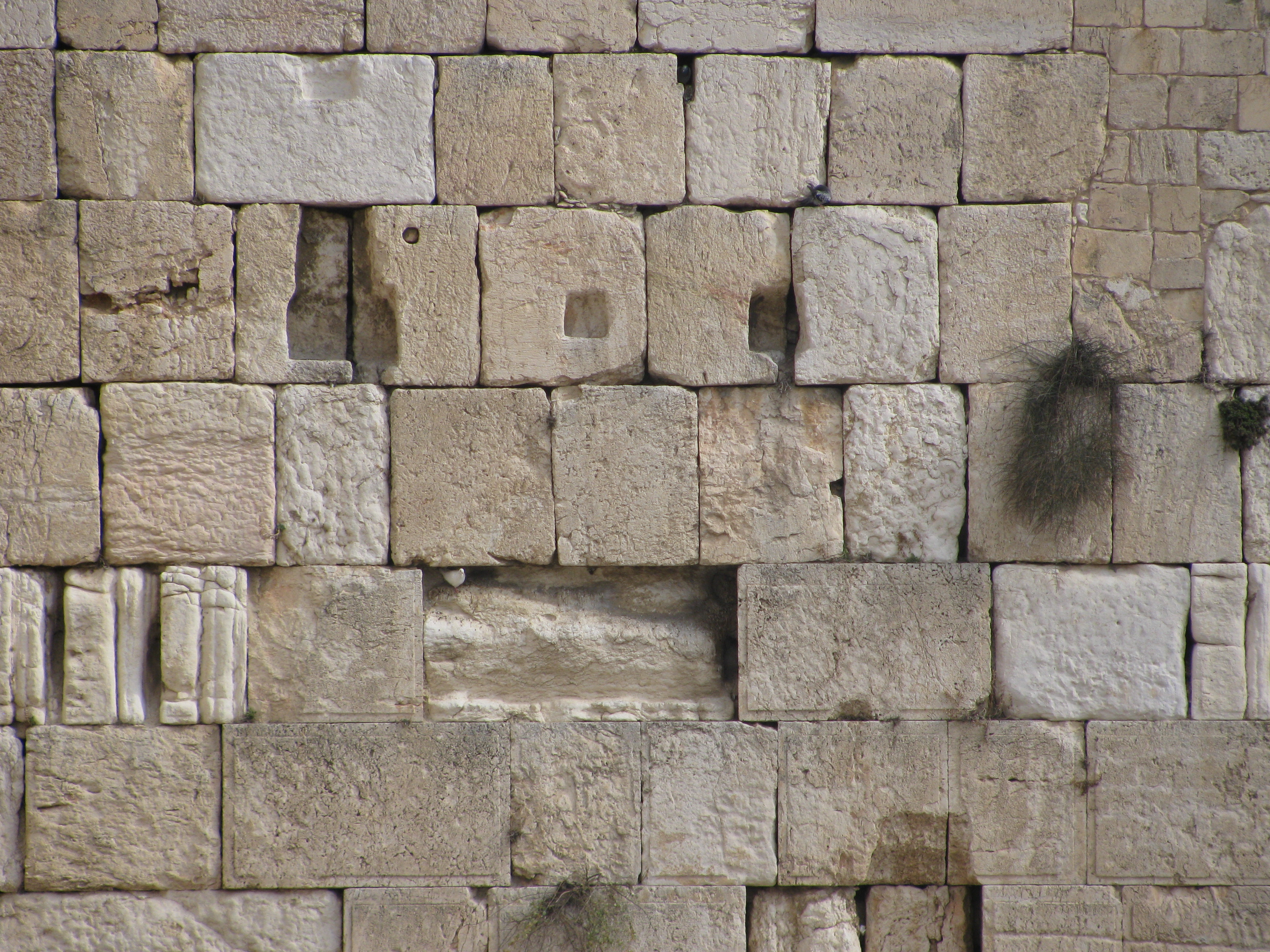
When I was in Israel back in November, I took several photographs of the stones of the Western Wall because I loved all the textures and colors. It’s a classic image; I thought it might be useful sometime for this blog.
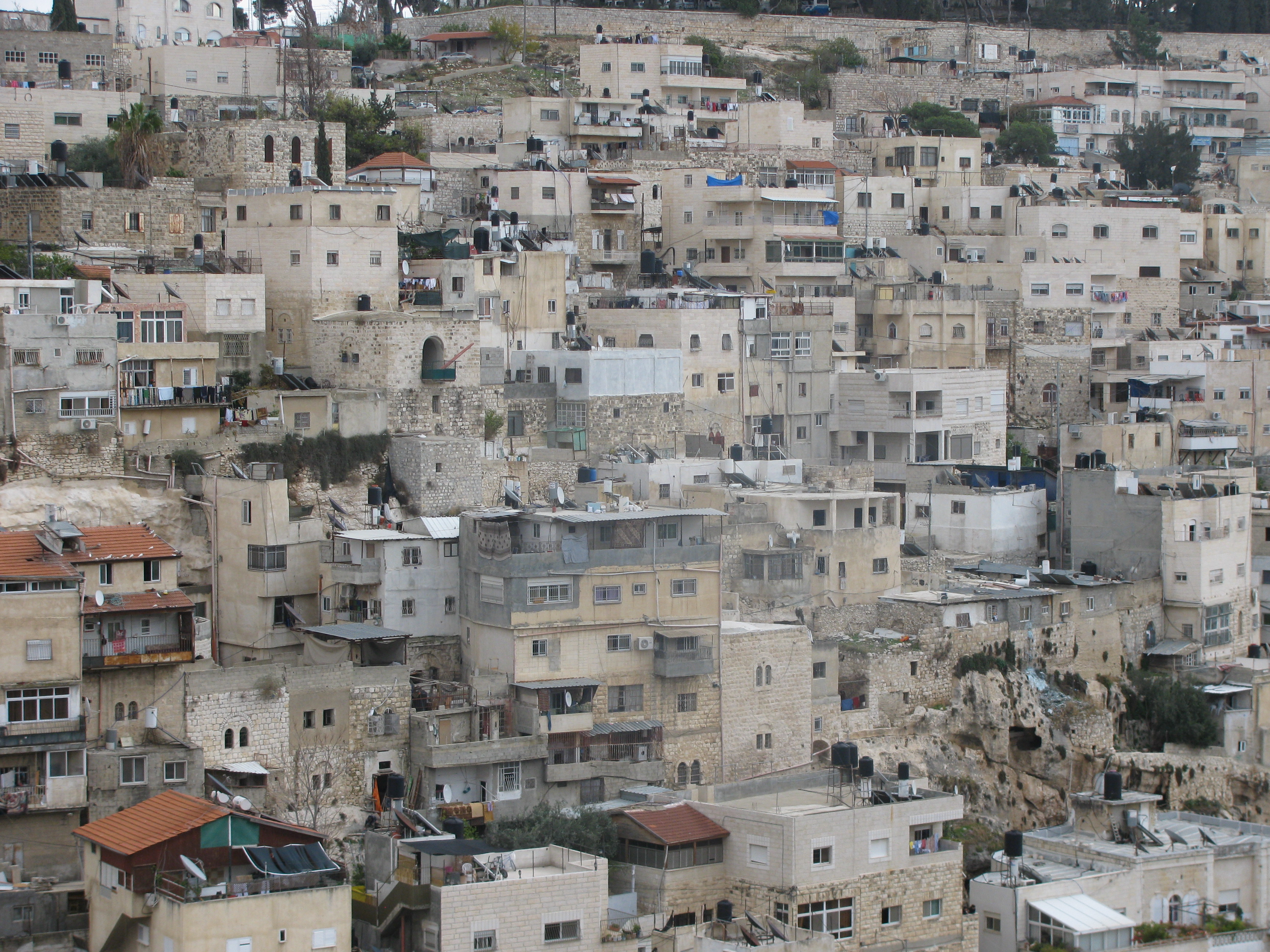
Then, as I wrote about in an earlier post, we walked a few hundred steps outside the Old City to the disputed Arab neighborhood of Silwan. And this is what I saw:
Photo by Ilana DeBare
When I squinted my eyes, those images blurred and became the same — both patchworks of textured white stone.

One was the Wall, the most sacred site in Judaism. The other was a workaday Palestinian neighborhood.
The Torah portion for my Bat Mitzvah service almost a year ago concerned construction of the Tabernacle, and I talked about how places — official “sacred” places, places in wild nature, other kinds of places and settings — can help us get in touch with the spiritual part of ourselves.

But physical places can also become idols, false gods.

I understand how, for many people, the Western Wall is a sacred place. But what those photos say to me is that living communities — the people in them, no matter the nationality or religion — are equally sacred.

To me, the people of Israel and Palestine will always be worth more than any particular place. No stone wall is worth a human life, no matter how many thousands of years of Jewish history it embodies. No olive tree is worth a human life, no matter how many generations of Palestinian family tradition it represents.

That’s the basis of the land-for-peace concept, the basis of a two-state solution. Both Israelis and Palestinians must give up some places that are precious to them in order to save lives that are ultimately more precious.

With right-wingers like Netanyahu and Lieberman running the Israeli government, and the rejectionists of Hamas tying the hands of Palestinian moderates, that solution seems almost impossibly distant these days.

But governments can change — maybe Israel’s will. And perhaps a more open Israeli government will spark a parallel openness among Palestinians. What we can do, in the meantime, is keep reminding ourselves and our leaders that human lives are more sacred than any walls, trees or stones. That’s why I support groups like J Street and Americans for Peace Now.

There! It just took me 379 words to deliver this preachy message.

When really, all it takes is looking at those two images.

Tuesday, March 1, 2011

Ilana's Bat Mitzvah: Holy things for holy people

Followers of this blog know that we've been checking in from time to time with my friend Ilana DeBare as she has prepared herself to be a Bat Mitzvah in middle-age. Her reflections on her blog, Midlife Bat Mitzvah, are wonderful, funny, inspiring and, well, very Ilana.

Her Bat Mitzvah was Saturday, and I much regret I could not be there. She has posted her meditation on a passage of Torah, and I am re-posting her reflection in full below. She has a universality to this that certainly speaks to me, and I hope to you as well. And do listen to her chant about kitchen remodeling in the middle.

Here is her reflection:

My d’var Torah – Vayakhel

February 27, 2011 by Ilana DeBare

Here’s the text of the d’var Torah (interpretation of Torah) I gave at my adult Bat Mitzvah service at Temple Sinai on Feb. 26, 2011. My portion was Vayakhel, from the Book of Exodus, 35:1 – 38:20. There is a brief audio clip in the middle of this post that you may either choose to hear or skip.

For more about my Bat Mitzvah service (including some photos), see theprevious blog post.

————————————————————————————

This week’s Torah portion is Vayakhel, which means, “and he gathered together.” It comes near the end of the book of Exodus, right after that unfortunate incident in the desert where the Israelites lapse into idolatry and build a golden calf.

In Vayakhel, Moses gathers the people together and tells them to bring all kinds of personal treasures to build a tabernacle to God. Before anything, though, he orders them not to violate the Sabbath – Shabbat is so important that it must not be infringed even for construction of a house of God. Then the people go out and bring their treasures – dyed ram skins and dolphin skins, fine linen and goats’ hair, gold earrings and nose rings. (I am sure there were a few Israelite moms and dads who were quite happy to donate their teenage daughters’ nose rings.)

The people end up bringing so much stuff that Moses has to tell them to stop – an unexpected turn of events that probably strikes envy into the heart of anyone who has ever led a fundraising campaign. (And there are a few of you in this room today!)

The portion continues with a very detailed description of all the components of the ark and tabernacle – the curtains, rings, boards, hooks, pedestals and so on — as the construction work is overseen by the master builders, Bezalel and Ohaliab.

There were several things that struck me about Vayakhel. The first is that it is almost a mirror opposite of the preceding portion, the debacle of the golden calf. In the golden calf episode, the Israelites donate their jewels and treasure to create an idol that is a travesty of holiness. In Vayakhel, they donate their jewels and treasure to create a truly holy structure. It is one of the rare moments in the Torah where the people actually do the right thing! Rabbi Elliott Kleinman points out that it is not jewels and treasure – not material possessions — that in themselves are immoral. It is what people choose to do with their possessions. The contrast between these two consecutive sections of Torah highlights this choice. As individuals and as a society, we can use our abundant resources to serve false gods of ego, prestige and power. Or we can use those resources to do good and enhance our world.

The second thing that struck me with Vayakhel was the importance of Shabbat, a point that has been emphasized by many of the commentators. Here the Israelites are about to build a house for God – can anything be more important than that? — and yet Moses tells them, before he says anything else, that they must stop that work on Shabbat.

Vayakhel tells us that we may not profane the Sabbath even for God. Yet Jewish tradition also says there is one thing for which we may break the Sabbath – to save a human life.

Thinking about this, I picture Jewish values as a pyramid of holiness – at the top, more important than anything, is preserving life. Just below that comes Shabbat, a time for rest and contemplation. Only under that come the physical trappings of what people typically think of as religion – the buildings, altars, prayerbooks, ritual items.

Rabbi Abraham Heschel described Shabbat as itself a kind of sanctuary or tabernacle. Just as Bezalel constructed the tabernacle, we construct Shabbat – only we build it in time, not in space. We build it anew every week, and that has served us well. For the past 2,000 years, Jews have had neither a Temple nor a tabernacle – but wherever we went, we could construct space for holiness in our lives by observing Shabbat.

The third thing that struck me with Vayakhel was the very detailed physicality of it – the vivid inventory of blue, purple and crimson yarns and tanned ram skins that the people were asked to bring, the mind-numbing recitation of all the screens and hooks and boards assembled by Bezalel. The Haftarah portion for today is remarkably similar, a description of the architect Hiram building Solomon’s temple in Jerusalem.

Both the Torah and Haftarah portions read a little bit like a shopping list for a trip to Home Depot. Hiram, for instance, assembles “two pillars, and two bowls of capitals that are on top of the pillars, and two networks to cover the two bowls of the capitals on top of the pillars, and 400 pomegranates for the two networks, two rows of pomegranates for each network, to cover the two bowls of the capitals that were on top of the pillars….”

It reminded me of when we remodeled our kitchen – that is, if, when we talked to friends about the remodel, we had chanted our process in Biblical trope:

Chanting (click to listen to audio file)

Seriously, though, what are we supposed to make of this long, long construction manifest?

As a Reform Jew, I believe that the Torah was written by human beings – humans who were wise and inspired, but were also creatures of their era. So we can speculate about some of the points that the author of this section was trying to make.

I suspect he was trying to impress listeners with the power of a God who warranted such opulence and craftsmanship, much as the builders of medieval cathedrals tried to convey the grandeur of God in their tall spires. He was also probably trying to show how Bezalel and his craftsmen followed God’s instructions down to the exact cubit – as the rest of us should follow God’s mitzvot to the letter. And, as someone who was probably a member of the priestly class during the First Temple period, the author may also have been using the details of the tabernacle’s construction to justify the décor and rituals of his own era.

But let’s step back from historical conjecture and think about what to make of this today, in our own lives.

Despite that initial bow to the primacy of Shabbat, this portion is about the importance of place and setting in spirituality. There is so much attention to detail – those hooks, those boards, those 400 pomegranates – not 300, not 500, but 400, and two rows of them for each network. All these material details – the number of pomegranates, and how many rows of them for each network – are part of creating a very particular setting that will foster a connection to the spiritual.

It’s a little paradoxical. The idea of spirituality is to get beyond the physical. And certainly people can have transcendent experiences anywhere – on an empty beach, a crowded subway, a seedy bar at closing time. So theoretically, it shouldn’t matter whether we are standing around in the wide open Sinai desert or entering a tent with dyed ram’s skins and golden cherubim and 400 pomegranates.

But it does. That’s one of the lessons of the golden calf episode – as human beings, many of us paradoxically need physical cues to help us transcend our physical selves. An altar, a priest, a whiff of incense. God and Moses learned that lesson, and gave the Israelites a tabernacle to fill those needs in place of a calf.

What do we as individuals need today? It varies. Some people find spiritual nourishment in group prayer in a synagogue or church. Others meditate or listen to music. Still others turn to nature – a walk in the redwoods or along the ocean.

I’d put myself in that last category. I enjoy the music, community and tradition of services, but I typically get much more of a sense of transcendence from being in nature. That’s where I get a sense of the miracle that is the universe, and an understanding that I am just a small part of it all.

It’s Christian transcendentalists like Thoreau who get a lot of the attention for finding spiritual nourishment in nature, but I’m not the only Jew who feels that way. Here is an excerpt from a Jewish writer whose home I visited last summer.

She wrote, “It’s not imagination on my part when I say that to look up at the sky, the clouds, the moon, and the stars makes me calm and patient. It’s a better medicine than either valerian or bromine. Mother Nature makes me humble and prepared to face every blow courageously.” She didn’t get to see much nature – only a tree through a dirty window, and even that only occasionally. She was Anne Frank.

In any event, take the time to think about what that setting is for you. Then assemble it with all the care and diligence of Bezalel assembling the tabernacle. Construct it in both space and time. You can start small – a half-hour walk alone by the bay on Saturday afternoon? Fifteen minutes of meditation before work in the morning? Keeping a Debbie Freedman CD in your car to play on your commute home?

Like the Israelites whom Moses gathered together in Vayakhel, we remain charged with assembling our own tabernacles, in space and in time. We remain charged with creating our own opportunities for spiritual reflection. In today’s hectic world, spiritual moments won’t happen automatically – we need to build them as consciously and deliberately as Bezalel crafted the tabernacle.

So bring your dyed rams’ skins and your golden nose rings. Bring your favorite Mi Shabeirach melody or your favorite path in Redwood Park. Bring 15 minutes of your lunch break or two hours of your Saturday morning.

There is a phrase in this portion – where it talks about people bringing their offerings to build the tabernacle, it uses the phrase “kol chacham lev.” “All who were wise in their hearts.” Some commentators like Nechama Leibowitz have suggested that the hearts of the repentant Israelites were even more important an offering than their gold jewelry and dyed rams’ skins.

May we be wise enough in our hearts to build the kinds of tabernacles we need to nourish ourselves today.


Friday, July 23, 2010

Guest blogger: Number my rabbis

Sorry, folks, our internet connection has been down the last day. So I am late posting today's entry into the blogosphere. Today I want to bring you a guest commentator, my friend Ilana Debare. As you may recall she is one of my journalist friends, and she is preparing for her Bat Mitzvah in middle-age. This is from her blog Midlife Bat Mitzvah. Enjoy...

Number my rabbis

By Ilana DeBare

What is it that makes us human — the capacity to love? to act morally? our self-awareness? our ability to envision our own mortality?

Nah.

It’s our compulsion to make lists.

After all, when was the last time your caught your cat making a grocery list? Or your schnauzer compiling names of the 10 hottest (female dogs) on the block? Do birds keep life-lists of the different varieties of humans that they have spotted?

This dramatic epistemological revelation popped into mind today when my friend Melissa alerted me to an annual Newsweek feature of which I had been blissfully unaware, a list of “The 50 Most Influential Rabbis in America.”

Actually, Melissa called my attention to a COUNTER-list of influential women rabbis called “The Sisterhood 50,” compiled by The Forwardnewspaper because only six out of Newsweek‘s 50 were of the female gender.

I of course looked immediately to see if either of my temple‘s two wonderful women rabbis were on the Sisterhood list. (They weren’t.)

Then I marvelled at how, in the space of just 40 years, we have had such a blossoming of female rabbinic leadership in America that you can have a Top 50 list plus hundreds of women rabbis who don’t even make it onto that list.

And then I thought about how silly this all is.

Why on earth should Newsweek, of all places, care about the top 50 rabbis in America?

Newsweek doesn’t in fact pick those 50 itself — it just reprints a list compiled for the heck of it by two Hollywood executives, Sony Pictures chairman CEO Michael Lynton and Time Warner executive vice president Gary Ginsberg.

(The old stereotype had it that the Jews ran Hollywood. Now apparently that is all wrong. It is Hollywood that is running the Jews.)

Or, as Melissa put it:

I’m still wondering why Newsweek does a 50 most influential rabbis list, and why the head of Sony gets to pick them….

In any case, why do people insist on doing these rankings? The US News & World Report college rankings have wreaked enough havoc on the world of higher education, with universities purposely trying to recruit larger and larger pools of applicants just so they can turn them all down and raise their selectivity statistics.

Perhaps that’s the next step for the rabbinate. I can see it already: Rabbis across the country doing marriages like crazy and encouraging their congregants to breed, breed, breed, just so that they can decline to do brisses and naming ceremonies:

“Oh, Rabbi Gudnick is so influential! Everyone wants him to do their baby’s bris, but US News & World Report says he only accepts 8.7 percent of those that apply.”

Newsweek and its CEO-arbiters ranked their rabbis, one through 50. So perhaps somewhere in some shul tonight a rabbi is tearing his or her heart out over why they were ranked number 27 and not 26.

Meanwhile, The Forward’s list of women didn’t rank its 50, just listed them alphabetically — which I guess is a little more feminist and egalitarian.

But still. Why are we driven to do (and read) this stuff?

I don’t quite think this is what Moses had in mind when he wrote a book called, in English, “Numbers.”

Friday, March 26, 2010

The Sabbath Manifesto: Shabbat, unplugged

My friend Ilana DeBare, who you may recall is studying for her Bat Mitzvah as a middle-aged adult, posted an item last week that I don't want you to miss. Today is a good day to read this because tomorrow is Saturday.

Ilana wrote about the "Sabbath Manifesto" to get off the grid for sabbath (and Saturday is the sabbath), and refraining from some other modern addictions. See what you think, maybe give this a try. Ok, in all honesty, I'd like you to read my blog tomorrow because it is about Holy Week, and then get off the grid.

Here is Ilana's item from her blog:

March 19, 2010 by Ilana DeBare

A few weeks ago my dear hubby Sam wrote a guest post about how he tries to observe Shabbat — no email, no meetings, and no work-related reading, but lots of biking, napping, and socializing.

This weekend a new national group is encouraging everyone — Jews and non-Jews — to celebrate Shabbat with a National Day of Unplugging. The idea is to “slow down lives in an increasingly hectic world.”

Sabbath Manifesto, a project of a group called Reboot, has suggested that from sundown on Friday March 19 to sundown on Saturday March 20, we:

Artist Jessica Tully designed this cell phone "sleeping bag" to tuck away your electronics on Shabbat.

  1. Avoid technology. (Yep, including this blog!)
  2. Connect with loved ones.
  3. Nurture your health.
  4. Get outside
  5. Avoid commerce
  6. Light candles.
  7. Drink wine.
  8. Eat bread.
  9. Find silence.
  10. Give back.

Here’s a little insider’s tidbit: The person responsible for publicizing Sabbath Manifesto (including getting a write-up in the New York Times!) is my friend Tanya Schevitz, another emigrant from the land of the downsized Chronicle. This was her first big foray into the world of public relations. Way to go, Tanya! More proof that there is life after newspaper journalism.

Meanwhile — and totally independently, I believe — my synagogue is organizing a cool 25 Hours of Shabbat celebration this weekend.

Temple Sinai is asking members to get out of their work/shopping/household-chore routines, and offering a slew of Shabbat activities — from family nature walks and bike rides, to a challah baking lesson, to programs about Ladino music or the influence of Yiddish culture on Tin Pan Alley. And of course a variety of Shabbat services and community meals! You can find more information about it here.

Which activities will we be doing? Ironically, none — although I love the idea.

We have an opportunity to use our new beach house — which we bought with two other families — every third week. And this is “our” weekend there.

So we’ll be at Stinson Beach — Sam biking for some 40 miles or so, me walking on the beach for a much shorter distance, and Becca (most likely, being a teenager) sleeping late.

It sounds very unplugged, and very Shabbat.

Saturday, February 13, 2010

Sabbath Saturday: A day of rest

My friend Ilana, who you may recall is studying for her mid-life Bat Mitzvah (and writing about it on her blog which you can read by clicking HERE), asked her husband Sam Schuchat to write about his observance of Sabbath on Saturdays. I love what he wrote, and it is reprinted in full below.

Incidentally, the Sabbath for Christians is also Saturday, not Sunday. Saturday is the seventh day, the day when God rested and therefore so should we. For Christians, Sunday is the day of Resurrection, the first day of the week, a day of celebration. So enjoy your Sabbath today, and please enjoy Sam's reflection:

I don’t work on Saturdays.

Okay, it would be more honest to say that I try not to work on Saturdays. From sundown on Friday night until sundown Saturday I don’t do e-mail, participate in meetings, or read anything that isn’t fun. I try very hard not to shop, although like any reasonably skilled Jew I am good at making fine distinctions. For instance, shopping for dental floss is not appropriate on the Sabbath. Sales at REI on the other hand clearly fall under the category of “recreation”. Generally speaking, I try not to do anything that in any way resembles what I do for a living, engaging instead in activities that are enjoyable and relaxing. Napping is high on this list, as well as bicycling.

Birdwatching - a form of Shabbat non-work at which Sam (left) excels

I started down this road several years ago for no particular reason other than to see if I could do it. Maybe because I wasn’t raised an Orthodox Jew, it’s much harder than I thought. It’s not just because we live in a work obsessed culture, or that we have the tools to work all the time, anywhere. It would certainly be easier to observe the Sabbath in an all-Jewish community. Several years ago I happened to be on a kibbutz in the Negev on a Saturday. Just for the heck of it, I went to the Saturday morning service in their chapel. Afterwards, I was quite surprised to see that the lunch included an elaborate and complete display of hard liquors. It’s not too hard to refrain from labor when you spend the morning in the synagogue and then have a few shots of whiskey at lunch!

Napping, another Shabbat activity at which Sam excels

Observing the Sabbath is way, way high up on the list of things Jews are supposed to do. The Sabbath is considered the most important holy day in the Jewish calendar, even though it happens every week. (Maybe if we rebranded from “the Chosen People” to “the Folks Who Invented the Weekend” we’d have more converts?) Jews don’t get married (or buried) on Shabbat; Ilana and I were married after sundown on a Saturday in October, and then only after the short Havdalah ceremony marking the end of the Sabbath was concluded. It is commandment number four out of ten, coming ahead of adultery, murder, and theft, and the seemingly simple commandment “you shall not do any work” (Ex 20:10) has spawned an enormous literature of commentary and custom dwelling on what, exactly, one is and is not allowed to do.

In orthodox neighborhoods in Israel and Brooklyn, for example, the elevators are programmed to run up and down all day, stopping at all the floors, so no one has to do the “work” of pushing the button and summoning it. Likewise one can, and a non-Jewish friend of mine just did, buy a “Sabbath ready” refrigerator whose light stays on all day on Saturdays so opening the door doesn’t turn it on.

Generally speaking, “work” is considered to be anything that uses, creates, or transforms energy. So no cooking, driving, flying, lighting fires, and so on. Sex, on the other hand, is encouraged. “Marital relations, ” as it is delicately referred to in Jewish legal commentary, is a positive duty on the Sabbath. It’s good to have something to do outside of the synagogue!

The longer I have persisted in trying to observe the Sabbath, the more I’ve realized the wisdom and utility of the practice, regardless of why we do it. It’s really about stopping and looking around at everything that is wonderful around us, and reconnecting with what we each, individually, are, rather than what we do. When you meet someone new, what do you ask sooner or later? “What do you do?” Are we only what we do for a living? Are we not more? Abraham Joshua Heschel wrote:

“The meaning of the Sabbath is to celebrate time rather than space. Six days a week we live under the tyranny of things of space; on Sabbath we try to become attuned toholiness in time. It is a day on which we are called upon to share in what is eternal in time, to turn from the results of creation to the mystery of creation; from the world of creation to the creation of the world.”

Although I am more likely to understand the creation of the world through science than through God, the hummingbird and the redwood tree are no less miraculous and beautiful. I can’t appreciate them, or my family, or my friends, or my community, or much else until I put down my tools, take a deep breath, and relax.

Give it a try. You don’t have to be Jewish, and it doesn’t have to be Saturday. Pick one day a week (furlough Friday for us state workers?) and don’t work, whatever that means for you. Spend the day with your beloved, take a hike, do some yoga, build a sand castle, go fishing. Do whatever it takes to take your mind away from your to-do list and towards a deeper appreciation of the world around you and your place in it.

If that doesn’t work, you can always go shopping. The REI midwinter sale starts this Friday!

Wednesday, December 23, 2009

Seeing the face of God


With the snow keeping us homebound, I thought it time to go back to one of those Big-Hard-Questions that I promised I would tackle in Advent. The season is nearly done, and I haven’t tackled many of them. But we will continue this discussion, and our walk through the labyrinth, through other seasons.

My friend Ilana DeBare, who is preparing for her Bat Mitzvah as a middle-aged adult, posted something on her blog Tuesday that got me thinking again on the Big-Hard-Questions.

She reports on a book about the variety of perspectives rabbis view God (Finding God: Selected Responses, by Rifat Sonsino and Daniel B. Syme). Ilana noted that the authors did not spend much time on the “classic” view of God as a Zeus-like wrathful deity up in the clouds. They went more interesting places.

Ilana mentioned some other views, including that of Mordecai Kaplan, who had this to say about popular concepts of God:
“To most people God is not really God but a magnified demon. That is why they cannot disassociate religion from supernaturalism.”
That really grabbed me. I believe that is absolutely true for many people, and is why the idea of being in a religion or having a religious experience is repelling to many people. And I can’t say I blame people for that feeling, given the religious landscape across our globe.

Let’s acknowledge that the Abrahamic tradition, of which we are a part, comes with an imagery of a bloodthirsty God. The Bible is filled with it: Pharaoh and his army are swallowed up in the Red Sea because God hardened Pharaoh’s heart, the rebels of Korah swallowed by the earth, the Revelation of John’s apocalyptic vision of the “End Time” when the elect will achieve rapture and the rest of us left in perpetual agony.

The religions that have flowed from the Abraham tradition – Judaism, Christianity and Islam – have histories filled with purges, pogroms, crusades and jihads. Is it any wonder that to many non-religious, God seems like a demon? Or that many westerners are attracted to the peaceful meditation practices of Buddhism?It should also be no wonder that authors like Christopher Hitchens can sell a lot of books by arguing that there is no God, and that concepts of God are fundamentally dangerous. Indeed, he is right to this extent: Many concepts of God are dangerous, and if God is who the hateful mouthpieces of wrathful religion say it is, then I want no part of that religion or that God, either.

Is there another way of seeing this? Is there another way of entering into an experience of the Holy that is authentic and real? Many have tried expressing alterntives. In the last 30 years or so, many Christians made Jesus into an easy-going, free-loving hippie. The image is certainly more inviting than a demon. But that, too, has left some feeling that is more spin than real.

A number of modern religious thinkers and mystics talk of God being a “numinous thread” binding the universe together in a single living cord, and I believe that is close to my own belief. It has a universal appeal, transcends dogma and elite elections of the chosen few. Yet it is not very personal; it is really a passive image of God that seems more like electricity buzzing through a long extension cord than a God who I can talk with.

So it is that this time of year, Advent, the time before the dawn of Christmas, I am particularly drawn to another idea of God: the One who comes to us as a helpless baby, born to an unwed very young mother: Miriam – we would call her “Mary.”

She named her son Joshua – and we would later call him “Jesus.” He was born in scandal, and lived much of his life violating religious rules; he was arrested and executed scandalously as a common criminal on a Roman cross (1 Corinthians 1: 18-24).

That people would see in this child the divine is nothing short of a miracle, for they were certainly experiencing an idea of God that was as far from a demon, or a Zeus, or their own expectations of a messiah as could be imagined.

No gloss or theologizing can cover up how radical a concept of the divine this is, then or now.

This is of course a Christian way of looking at things, and I am, after all, a Christian pastor so that should not be too surprising. But this way of seeing Christ is not shared by everyone who carries the label Christian, for it brings into question many of our own cultural norms and the re-packaging of Jesus by 2,000 years of Christianity.

I am much taken in recent years by the writing of James Alison, a former Dominican who teaches and writes from South America. He was left the Dominicans after it came to light that his partner died of HIV/AIDS.

In one of his books, Raising Abel: The Recovery of the Eschatological Imagination, Alison writes of how that experience led him to a new understanding of a God who has no outcasts, who needs no revenge, who lives inside and outside of time, and pushes us to upend our conventional culture-bound images of God and ourselves.

I’ve used one of Alison’s analogies in several sermons: he compares the Bible to a Lego set; you can put the pieces together to create a demon-god, or you can put the pieces together to see a creator who not only loves us, but who even likes us for who we are and who we are becoming; and challenges us to take that reality and see life without fear or the need for the rule of vengeance and death. Alison writes (p. 139):
“The coming of the Son into the world has as its end to create a belief in the absolute aliveness of God and the empower us in this way to act as if death were not, thus being set free from our compulsion to act out in a way governed by the kingdom of death.”
The implications of that idea are vast, for it suggests a different way to live. Religion, to me, is ultimately not a set of beliefs or dogmas – a contest of mine are better than yours – but a way of discovering how to live without fear in the presence of the Holy. Alison writes of this (p. 139):
“People like this do not fear the exposing of their previous participation in the system or mechanism of the dominion of death, because that is being left behind as they begin to allow themselves to be transformed into a mansion of life without end in the midst of the world.”
There is a great deal more to say, and it leads us onto the difficult ground of atonement theology, so it seems a good place to stop today. May you have many blessings this Christmas and in the year to come.

Nativity painting by Flor Larios.

Wednesday, December 2, 2009

What is prayer? A personal journey: Part I

“Let everything you see represent to your spirit the presence, the excellency, and the power of God; and let your conversation with the creatures lead you unto the Creator; for so shall your actions be done more frequently, with an actual eye to God’s presence, by your often seeing him in the glass of the creation.

In the face of the sun you may see God’s beauty; in the fire you may feel his heat warming; in the water, his gentleness to refresh you: he it is that comforts your spirit when you have taken cordials; it is the dew of heaven that makes your field give you bread; and the breasts of God are the bottles that minister drink to your necessities.”

From The Rules and Exercises of Holy Living, by Jeremy Taylor, 1651
(Chapter I, Section III)


What is prayer? Many have tried to answer the question, and every answer I have ever heard has both truth and limits. So I give my own answer today with great trepidation. I hope there is a kernel of truth here, but I expect this will fall short.

The best way I can give an answer is by telling you about my own prayer life, which has had many ups and downs over the years. At its best for me, prayer is a conversation, much as Jeremy Taylor above describes. At its driest, prayers are words on a page, or meandering thoughts with no heart or no substance. Prayer for me has many peaks and valleys, as does life itself.

Let me describe a little of my private prayer life (as distinguished from my public prayer life of sacraments and community worship). I provide this not as a recipe guide, but simply as a sketch of what works for me (and it will inevitably change, so this is a snapshot). This might work for you, or might not.

I’d be most interested in hearing what works for you in prayer. This is intensely personal stuff, so I do not propose telling you more than I am comfortable telling you, nor would I expect you would go beyond your own comfort zone in your description of prayer.

So here goes…

My foundation for prayer are the Biblical texts read as prayer. Stay with me and I will explain. My private prayer life for many years (20 years to be exact) has been built atop The Daily Office, which is the Episcopal/Anglican cycle of Morning and Evening Prayer. The prayers come straight out of The Book of Common Prayer, and each day has biblical readings and canticles assigned rotating on a two-year rotation. The church year begins on the First Sunday of Advent, so we have just entered Year Two of the Daily Office cycle.

To make my life slightly easier, I have a big fat leather-bound book that contains all of the biblical readings, in order, day-by-day for the full two years (the book was a gift at my ordination from Barry Beisner, who was my shepherd through the ordination process; he has gone on to become the Bishop of the Diocese of Northern California). You can also find all of the daily readings and prayers each day by clicking HERE.

That is the superstructure upon which my prayers are built.

My method has taken me many years to develop, and truthfully, is always evolving. I learned a
prayer method many years ago from George Murphy, S.J. (and you may recognize this as Ignatian). I have also worked with spiritual directors (mostly Jesuits) who have helped me adapt this method and keep it fresh.

After reading the passages for the morning, I sit quietly, close my eyes, try to quiet the noise between my ears, and imagine myself somewhere in one of the biblical passages. Which one speaks to me today? I paint an imaginary picture of the scene, what it looks like, what it sounds and smells like, and then I put myself into the picture.

I do my best to describe what I see and feel, and then I listen. I don’t crank up my advice machine for God, but instead notice who else is there with me – usually some very familiar friends and family, but sometimes a few surprising people as well. Those I know who are sick or hurting or in trouble are there. Sometimes Jesus comes into the picture with us. I listen to what Jesus might be saying, if he is saying anything at all. Sometimes he just sits awhile.

Usually the scene is a familiar place. It is real. I do not imagine scenes out of a Cecil B. DeMille Bible movie, or even out great religious art (not that there is anything wrong with that; praying with icons is a rich tradition all its own). I may linger for several days in a single place.


For several weeks running in my prayer image, I was sitting on a ridgeline in the High Sierra, a rocky spot very familiar to me. But I’ve sat in Mexican villages and at a cattle ranch where I stayed years ago. I've also sat in the dark catacombs of Canterbury Cathedral. When Jesus teaches while sitting on a beach by the sea, almost always I end up sitting on a log at Pope Beach at Lake Tahoe with Jesus.

Sometimes Jesus looks like Jesus in popular art, white robes flowing, or he might look like the icon to the right. But that is rare. Sometimes Jesus looks like a park ranger, or a ranch hand. Sometimes Jesus is male, sometimes Jesus is female.

The important thing for me is that I sit and listen. I am not there giving God advice. There are times when I feel Jesus is asking me a question, and I try to answer. But I am not telling God what to do.

Some mornings this picture is vivid and stays with me all day; other mornings, it doesn’t come at all. When the picture doesn't come, I sit with a few words from one of the passages and think how it might have something to do with what confront me for the rest of the day. Some mornings even that will not work. Prayer has peaks and valleys.

When the image goes, I return to the prayers of the day, and sometimes they have a particular vitality that is fed by my prayer images.

At the end of the day, I engage in an “examine.” I ask what I have done that fits what I heard in my morning prayer; where did I fall short? I try to enfold my day in prayer.

You could say this is simply me listening to my imagination, and you would be right. But I believe that God especially reaches us in our imaginations, in our dreams, in our moments waking and our moments sleeping, and in those moments when the outer world is quieted for a time.

Yet I am also aware that this kind of prayer can be self-absorbed, and if I am not careful, it will block the world from my doorstep, separating me from the community of faith – and the wider community of no faith at all. The danger is my prayer could become all imagination, all fantasy, all selfishness.

And that brings me squarely to the written words on the page, the sacraments, and the community at prayer - all grounding me in the reality of life. More on that next time.

Tuesday, December 1, 2009

An Advent discussion: The Big-Hard-Questions

This Advent, I would like to do something special with you on this blog.

I want to spend time here considering a few of the big-hard-to-get-your-brain-around questions about God, prayer and life itself. Those are huge topics, and writing on these can easily fill a library.

So I propose going slowly, circling around a bit, talking a few steps at a time, and seeing where we end up.

Think of this as walking a labyrinth.

Every few days this Advent, I will write something on one of these topics. I hope you will walk with me, and lend me your wisdom, your experience, and maybe share some of your spiritual practices. What works for you? Please add a comment or two.

Some of what we usually do here on this blog will continue, like the Monday Funnies. But let’s spend Advent being a little more intentional, a little more aware of our faith journey. Let’s ask those big-hairy-questions, maybe acknowledge a few doubts, examine our prayers, and share a few moments when we feel the presence of the holy.

I am partly inspired to do this by my friend Ilana DeBare, who recently began a journey to her Bat Mitzvah as a middle-aged adult. She noted recently that although she was raised Jewish, and lived for a time in Israel, she had not explored very deeply her Jewish religion.

I’ve known Ilana for many years, from when we worked to together as reporters in The Sacramento Bee Capitol Bureau. Ilana moved to The San Francisco Chronicle, got married, has a wonderful daughter, helped start a girls school (The Julia Morgan School in Oakland), wrote a book or two, and left The Chronicle along with everyone else I know who once worked there.

Ilana decided to study with a rabbi and work her way to a Bat Mitzvah in February 2011. I tell you all this because Ilana also started a blog, inviting her friends to walk with her on her journey. You can follow her journey by clicking HERE; I would ask that readers of this blog be respectful when reading hers.

She has begun at the ground level, always a good place to start, by asking basic hard questions about faith, God and prayer. I’ve been intrigued by her questions and by the answers from her friends. I think it a good Advent exercise for us to go into these questions, too, on this blog. Please do not see this as competing, but more as a parallel path through the labyrinth. I am not looking for doctrinal arguments or turgid theological treatises, but something less loaded, more simple, and closer to who each of us are created to be. There are no extra points for being "right," and I am not looking for sameness.

I begin this journey with an observation made by Ilana: “I don’t believe there is an old white man with a long white beard sitting on a throne up in the clouds” who is deciding who gets sick and who gets well, which prayers to answer, and which to ignore.

I don’t believe that either.

But that begs the question: What do I believe? About God? About prayer? About life and death? Let’s walk with those questions; walk with them through the labyrinth for a time.

Our answers may not be perfect, and my answers may not be your answers, but maybe by walking together we will find ourselves at the center somewhere looking at the face of God.

I want start our walk by considering prayer. Tomorrow I will share with you a glimpse of my own prayer life, not as a recipe guide, but simply as an offering of my own experience with prayer and what works for me.

I hope to see you back here again.

The labyrinth design is from Chartres Cathedral, and the design has been duplicated all over the world. The photo shows people in a yoga class on the labyrinth (same design) at Grace Cathedral in San Francisco.

Saturday, November 14, 2009

Blogs I like

This morning I am feeling out of words -- perhaps I need a sabbath from the blog for a bit. So I want to tell you about a few blogs I really like. There is a whole string of them on the left side of this page. But here are three I am plugging:

Lori K's Cafe -- Yep, wife Lori's food blog. Check out her cooking tips, everything from the difference between fried and baked bacon to drying parsley. Even if you don't cook, it's good fun and probably will make you hungry. Find her blog by clicking HERE.

Midlife Bat Mitzvah -- My long-time friend Ilana Debare, a former reporter and columnist with The San Francisco Chronicle, has started a blog about her journey as adult Bat Mitzvah (the ceremony to take place in 2011). What else is a middle-aged former journalist to do? Ilana has a great wit and a genuine discerning heart; travel along with her by clicking HERE.

Pickup truck bishop -- Speaking of journeys, Dan Edwards, the Episcopal Bishop of Nevada, writes a wonderful blog about his travels around his state in his pickup truck (which is patched together with duct tape). He has a dry wit, a holy presence and a cowboy hat. Follow him by clicking HERE.