Showing posts with label Israel. Show all posts

Saturday, November 17, 2012

Pray for the peace of Jerusalem, peace in the Holy Land

From today's Daily Office reading. . .


Psalm 87


On the holy mountain stands the city he has founded; *
the LORD loves the gates of Zion more than all the dwellings of Jacob.

Glorious things are spoken of you, *
 O city of our God.

I count Egypt and Babylon among those who know me; * behold Philistia, Tyre, and Ethiopia: in Zion were they born.

Of Zion it shall be said, "Everyone was born in her, *
 and the Most High himself shall sustain her."

The LORD will record as he enrolls the peoples, *
 "These also were born there."

The singers and the dancers will say, *
 "All my fresh springs are in you."

+ + +

Pray for the peace of Jerusalem, peace in the Holy Land.

Tuesday, January 24, 2012

Sacred stones: Observations from a friend

My friend and former journalism colleague, Ilana DeBare, recently visited Israel and she has posted a number of fascinating observations on her blog, Midlife Bat Mitzvah, about what she experienced and the conflict there. I don't usually mention a person's religion, but it does help to know that Ilana is Jewish and she had once lived in Israel for time.

She posted this yesterday, and I think it quite insightful and very much worth your consideration:


Walls, stones and what is sacred

January 22, 2012
I’m a writer and I swim in words. But occasionally, there is an image that expresses things better than any words I could write.

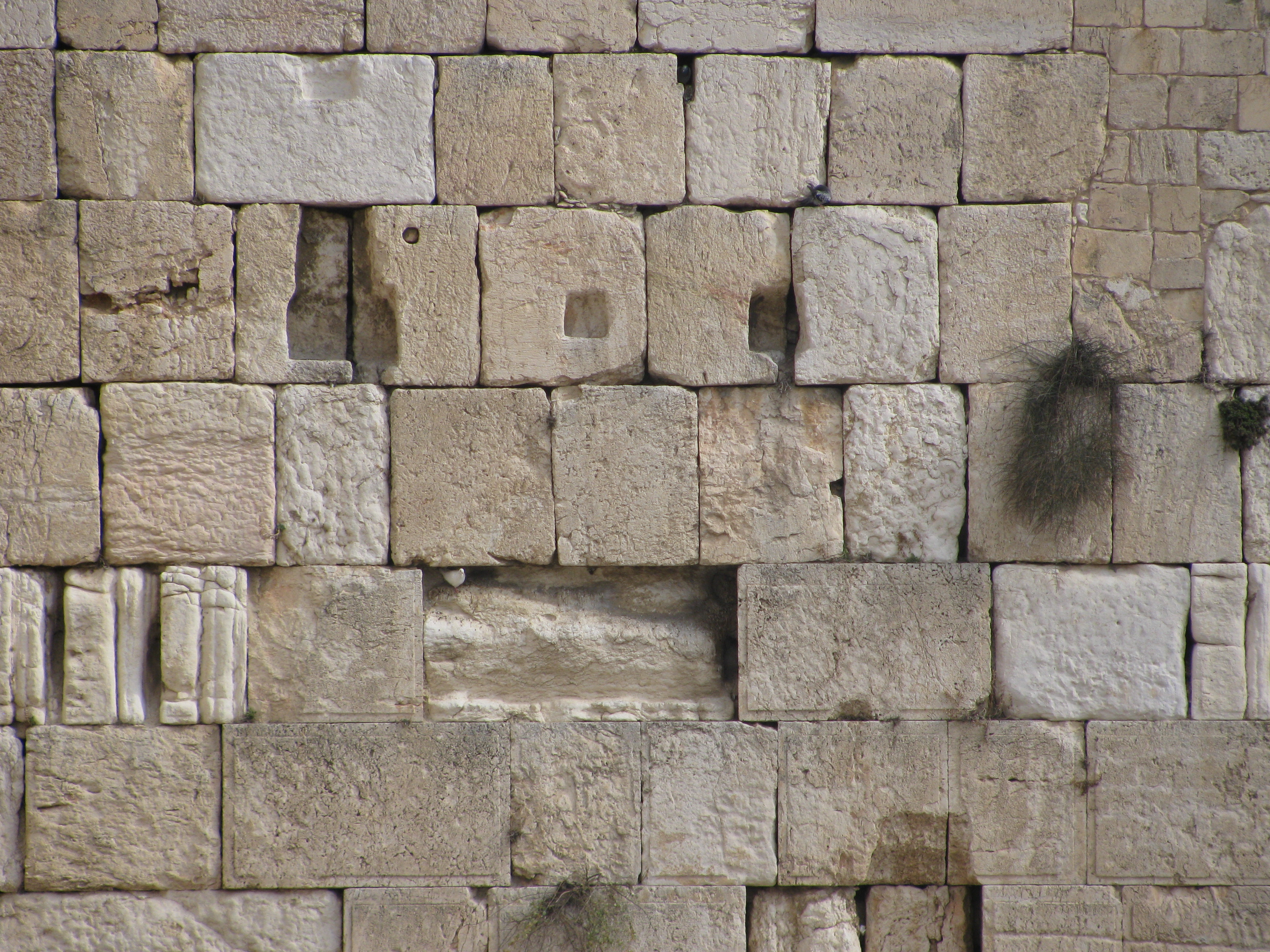
When I was in Israel back in November, I took several photographs of the stones of the Western Wall because I loved all the textures and colors. It’s a classic image; I thought it might be useful sometime for this blog.
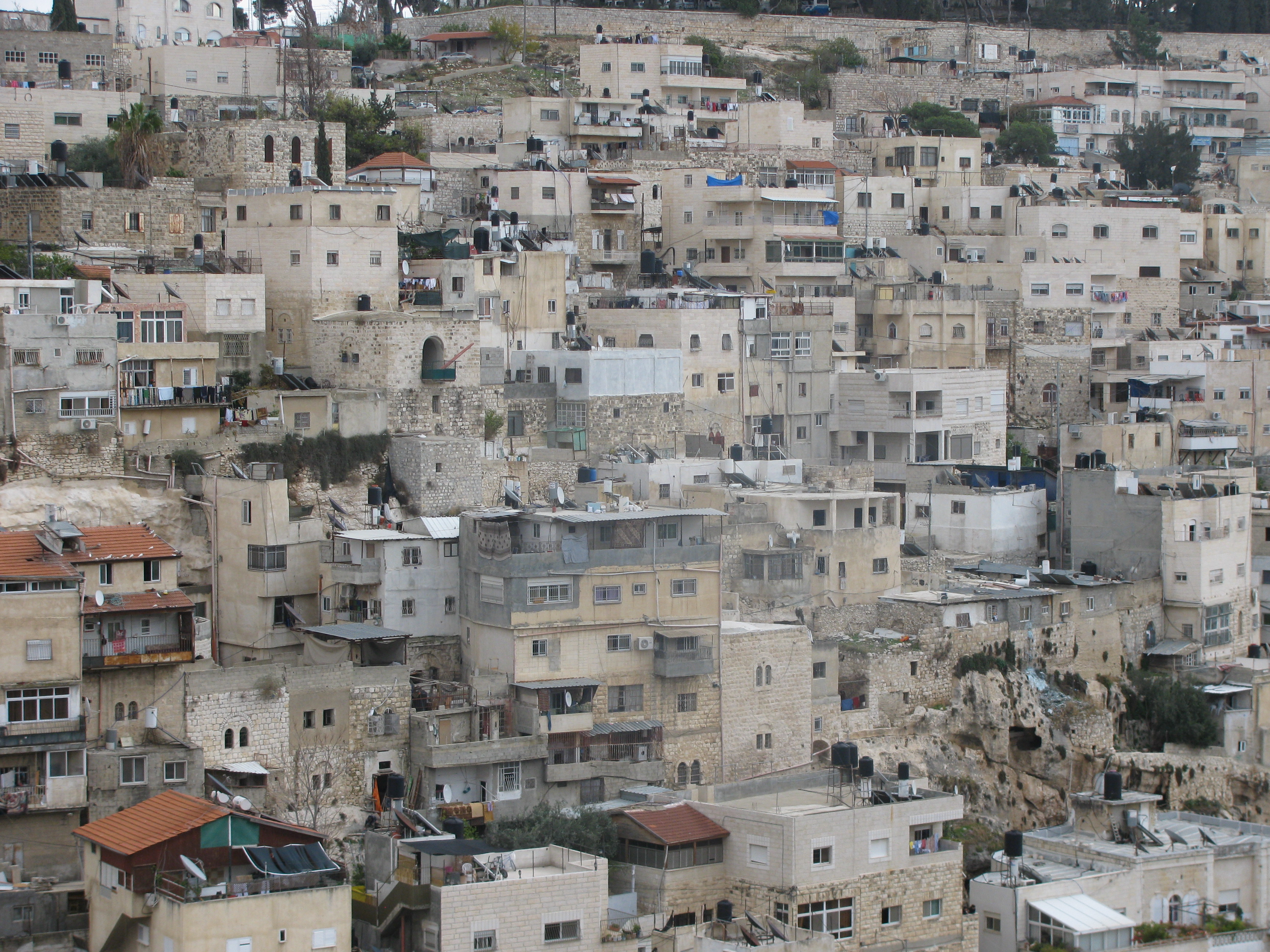
Then, as I wrote about in an earlier post, we walked a few hundred steps outside the Old City to the disputed Arab neighborhood of Silwan. And this is what I saw:
Photo by Ilana DeBare
When I squinted my eyes, those images blurred and became the same — both patchworks of textured white stone.

One was the Wall, the most sacred site in Judaism. The other was a workaday Palestinian neighborhood.
The Torah portion for my Bat Mitzvah service almost a year ago concerned construction of the Tabernacle, and I talked about how places — official “sacred” places, places in wild nature, other kinds of places and settings — can help us get in touch with the spiritual part of ourselves.

But physical places can also become idols, false gods.

I understand how, for many people, the Western Wall is a sacred place. But what those photos say to me is that living communities — the people in them, no matter the nationality or religion — are equally sacred.

To me, the people of Israel and Palestine will always be worth more than any particular place. No stone wall is worth a human life, no matter how many thousands of years of Jewish history it embodies. No olive tree is worth a human life, no matter how many generations of Palestinian family tradition it represents.

That’s the basis of the land-for-peace concept, the basis of a two-state solution. Both Israelis and Palestinians must give up some places that are precious to them in order to save lives that are ultimately more precious.

With right-wingers like Netanyahu and Lieberman running the Israeli government, and the rejectionists of Hamas tying the hands of Palestinian moderates, that solution seems almost impossibly distant these days.

But governments can change — maybe Israel’s will. And perhaps a more open Israeli government will spark a parallel openness among Palestinians. What we can do, in the meantime, is keep reminding ourselves and our leaders that human lives are more sacred than any walls, trees or stones. That’s why I support groups like J Street and Americans for Peace Now.

There! It just took me 379 words to deliver this preachy message.

When really, all it takes is looking at those two images.

Thursday, December 15, 2011

Pray for peace in the Holy Land


Palestinian students from United Nations schools in the Jericho area create an aerial image in the shape of Pablo Picasso’s Peace Dove, at the foot of the Mount of Temptation just outside the West Bank city of Jericho on November 25, 2011. The UN initiative was done in conjunction with the world-renowned aerial artist, John Quigley, to send out a peace message to the world.
Photo credit: Ahmad Gharabli/AFP/Getty

Wednesday, June 8, 2011

Guest post from Bill Bergen in Jerusalem

Bill and his friends, Judy and Larry, in Jerusalem
Bill Bergen, who some of you know from his many years of lay ministry and leadership at St. Paul's, is currently visiting friends (Judy and Larry) in Jerusalem.

The other day, Bill emailed a few photos and a description of what he has seen and experienced so far on his trip. With his permission, I am posting his email and some of the photos. Hope you enjoy:

+ + +  
Jerusalem -- With the new week and Larry’s return to work, Judy and I headed on Monday to Bethany-Beyond-the-Jordan, the site of Jesus’ Baptism and the ascension of Elijah in a chariot of fire. In contrast to the sometimes speculative claims made by all three faiths for specific sites in Jerusalem, the location of Jesus’ baptism is strongly supported by specific Gospel wording, archeological findings, and early pilgrims’ accounts. 
Until fairly recently the area lay in no-man’s land, and was laced with land mines (ironic for the site where Christians mark the beginning of the Prince of Peace’s ministry). The site is being developed as a pilgrimage site and tourist attraction, and several denominations have churches or are building ones in the area. 
The Jordan is no longer deep or wide, the water having been siphoned off by Syria, Israel, Jordan, and the Palestinian Authority upstream. As I dipped my hand in the Jordan’s water I gazed across the mere 20 yard-wide stream to the other bank on which Israel which has built its own site to attract pilgrims and tourists.

Looking across the Dead Sea back toward Jerusalem at dusk
That night we drove to a sunset picnic on a promontory overlooking the Dead Sea organized by Irish/Italian friends. Directly across the valley to our south, on a prominent hilltop, is one of Herod’s Palaces. Here, according to Biblical accounts and tradition, John the Baptist was executed by Herod. The wind was fierce, and grew a bit cold, but the scenery as the sun set over the far highlands was nothing short of sublime. And the food was fantastic.

Wednesday was a quiet day as Larry worked and Bill and Judy caught up on rest and reading. On Thursday Larry took Bill to lunch at his favorite local lunch spot where he tasted genuine local food and enjoyed the typical Jordanian hospitality. That night Larry and Judy went to a reception at the Italian Embassy . . .

On Friday the three of us left early to swim in the Dead Sea, the lowest point on earth at 500 feet below sea level. Whereas sea water consists of only three or four percent salt, the salinity in the Dead Sea is 30 percent, and you literally cannot sink to the bottom. This was my first trip, and I found I had trouble standing up as your feet float out from under you. Afterwards Judy and I tried on the famous Dead Sea mud resulting in blackmail-quality pictures (see below) taken by Larry who was altogether too smart to join in.

Pool where it is said Jesus was baptized in the River Jordan
Next came a trip over a steep, winding road over a desolate landscape to the top of Mt. Nebo where Moses first saw the Promised Land that God had forbidden him to enter. He died on the mountain and was buried somewhere there though the exact location is unknown. 
We saw what Moses saw and viewed the ruins of Moses Memorial Church. We also examined the mosaics there before heading on to Madaba for lunch at a well-known local restaurant. From there it was a short walk to St. George’s Church, location of the famous Byzantine mosaic map of the Holy Land. As spectacular and fascinating as that is, the modern mosaics on the walls of the church were also worth study.

Pilgrims carrying a cross on the path of the Cross 
Saturday’s big excursion was to the north, to Jerash, to tour one of the best-preserved Roman ruins in the Middle East. It my first visit to such a site, and elicited from me such original exclamations as “Whoa!” and “Wow!” We clambered all over the ruins, examining Roman architectural details, road construction, Roman mastery of acoustics, the layers of history, and even how the Romans managed their scarce water. We had mint tea at the Temple of Artemis (Diana in Roman mythology) and viewed how the columns were designed to sway gently to accommodate the frequent earthquakes in the region, which explains how so many of them continue to stand. 
We also toured with guides and flashlights the chambers underneath the temple that served as the places of sacrifice. As we walked back through the site, we encountered a flock of sheep being herded through the site (see photo -- note the "marching pillars" still buried in the ground at top right). The timelessness of the flock and shepherds set against the modern city beyond the ruins is the sort of contrast you see often here.

Larry and Judy say I am their first visitor ever to be unaffected by jet lag. I know that is largely due to their hospitality and the adrenaline generated by the trip of a lifetime. I never imagined doing what I have done and seeing the sites and sights I have seen, and have been reduced to speechlessness by the wonder of it all.

Thursday, September 2, 2010

Pray for peace in the Middle East: A litany for peace from the Anglican Cathedral in Jerusalem

This week maybe we should hold our breath a little. Or better yet, pray.

The heads of state of Israel, the Palestinian Authority, Egypt, Jordan and the United States are meeting in Washington DC, the first serious peace talks in decades.

Whatever your politics, I hope we can join together in praying that these leaders will find common ground and begin to build a lasting peace. Many forces are arrayed against their success.

But we can bring our prayers.

Each day the Anglican Cathedral in Jerusalem, and its bishop, The Right Rev. Suheil S. Dawani, are praying this Litany for Peace. Let's join them:

The Cathedral of St. George the Martyr, Jerusalem
O Lamb of God, you take away the sins of the world,
Have mercy upon us.
O Lamb of God, you take away the sins of the world,
Have mercy upon us.
O Lamb of God, you take away the sins of the world,
Grant us your peace.
Lord, have mercy.
Christ, have mercy.
Lord, have mercy.
Heavenly Father, we thank you for the birth in Bethlehem of the Word made flesh, Jesus your Son; who dwelt among us full of grace and truth.
Lord in your mercy, hear our prayer.
We thank you for his life; his death here in Jerusalem as he carried our sins and suffering, and for his glorious Resurrection in which he gave us new life with him.
Lord in your mercy, hear our prayer.
We thank you for entrusting to us the ministry of forgiveness, reconciliation and peace-making for the healing of your creation.
Lord in your mercy, hear our prayer.
We pray for all victims of bloodshed, violence and persecution and those who are in danger here in this Land -- in Gaza, Israel, Palestine and throughout the world.
Lord in your mercy, hear our prayer.
We pray for all who grieve for loved ones who have died in the desperation of violent actions this past week.
Lord in your mercy, hear our prayer.
We pray for all who promote violence, that their hearts may be turned to the way of peace.
Lord in your mercy, hear our prayer.
We pray for children and young people that you may fill them with hope for the future.
Lord in your mercy, hear our prayer.
We pray for the guidance of your Holy Spirit upon us; upon all the leaders of the Land of the Holy One; upon President Obama and President Abbas, Prime Minister Netanyahu; upon all those in leadership positions among those who bear arms; upon all the leaders of the United Nations and upon all those in authority in the nations of the world to seek peace and pursue it.
Lord in your mercy, hear our prayer.
Heavenly Father, we praise and glorify you. You are our only refuge in a troubled world.
Lord in your mercy, hear our prayer.
The Lord be with you.
And also with you.
Let us pray. (in unison)
Lord God Almighty, you have made all the peoples of the earth for your glory, to serve you in freedom and in peace: Give to us and the people of all the nations a zeal for justice and the strength of forbearance, that all of your people may use their liberty in accordance with your gracious will; through Jesus Christ our Lord, who lives and reigns with you and the Holy Spirit, one God, for ever and ever. Amen.

Tuesday, March 10, 2009

Christians surviving in the Holy Land - barely

This Lent, we might want to keep in our prayers and our awareness those Christians who live in the Holy Land, and who have lived there for generations. Harry Hagopian, an Armenian Christian living in Jerusalem, writes eloquently today in Ekkelesia about their plight:
Eugenie Tabourian, my nonagenarian maternal grandmother, passed away recently. She was an Armenian Christian from Jerusalem. Our whole family are Jerusalemites, in fact, dating back to the time when my grandparents fled Ottoman Turkey during the Armenian genocide of 1915.

Indeed, the Holy Land was once bustling with local Christians, and two of the four quarters of the Old City of Jerusalem (the Christian and Armenian ones) were a living testimony to their millennia-old presence. Today, many indigenous Christians - including members of my own family - have left this golden city (as the prophet Zechariah described it) in search of fresher pastures that provide more viable political and economic alternatives.

So what do Christians witness to in a holy land that is host to many hurried pilgrimages?
To read the full story, click HERE. The photograph is of Palestinian Christians lighting candles in Bethlehem.

Friday, January 30, 2009

A few items for your consideration

I am not posting much on my own for a few days, but there are a couple of fascinating articles I would commend to you from Ekkelsia, the British Christian peace oriented organization (Ekkelsia's newsroll is featured in the left column of this blog). 

The first is by Uri Avenery, an Israeli peace activist and former member of the Israeli Knesset, who writes on how President Obama is gently setting a new course in relations with Israel that will alarm the Israeli right-wing. You can read his piece HERE. The second is by Martin Marty, the prominent Lutheran theologian, who writes about the difficulty with overtly Christian prayers in public settings like the inaurgural of President Obama. You can read that HERE.

Saturday, January 17, 2009

Make your ears tingle

Barbara Crafton is an Episcopal priest from New Jersey who spends a lot of time in Italy. She sends out a daily email to her friends called the Geranium Farm, and she maintains a website called GeraniumFarm.org. She is really cool.

Barbara plants a lot of seeds. This one came in this week:
Use The Power You Have

"See, I am about to do something in Israel that will make both ears of anyone who hears of it tingle. "
1 Samuel 3:11


Now, there's a colorful expression. Our ears are tingling right now, in fact, every time we turn on the radio for the latest news from the Holy Land. Where can it end, we ask each other. How much worse can it get? What is the way out?

I don't envy your new president, someone says at dinner, and all the Americans nod soberly. An economy in tatters, war in two countries, and worse news from Gaza every day -- the conflict in Gaza has already cost more than 1,000 lives since December and the fighting continues. Such intractable problems, and so huge. No wonder inaugurations begin and end with prayers.

Those entrusted with the leadership of nations carry a heavy and lonely load --heavier than the one we carry. They also wield more power than we do, of course. But we have the power we have, and all of us -- the great and the ordinary -- have our power for a reason. It's to use for the good. None of us are here for ourselves alone. We are here for each other.

We can't be the ones negotiating a ceasefire, but we can pray for one. We can't be on the ground caring for the wounded or comforting the bereaved or housing, but we can support those who are. Episcopal Relief & Development remains in constant touch with the Bishop of Jerusalem, the Rt. Rev. Suheil S. Dawani and with Al Ahli Hospital central Gaza City. The hospital is now treating more than 50 injured civilians every day. The hospital staff is working around the clock to provide emergency medical care. Recently, the hospital finally received a delivery of desperately needed medicine, supplies, blankets, and food -- the ongoing fighting makes such deliveries difficult and dangerous. Episcopal Relief & Development also continues to send funds to help the hospital meet the rising costs of treating patients.

This is our work. Others carry it out for us, but we fund it through our ER&D donations. It literally cannot happen without us.

Monday, December 29, 2008

The Holy Land: Becoming voices of reconciliation

With all of the escalating violence and military action in the past few days in Gaza, I think it incumbent upon us as Christians to speak as voices of reconciliation and peace and deescalation. Blessed are the peacemakers, Jesus tells us, and they would be us.

My former bishop from the Diocese of Northern California, The Rt. Rev. Barry Beisner, recently returned from a pilgrimage to the Holy Land with his wife, The Rev. Ann Hallisey. Both are treasured friends and helped me in big ways and small through the ordination process and beyond into our transition to Virginia.

Barry shared this message with the Diocese of Northern California on Christmas Eve, and I share it with you:

Dear Friends in Christ:
Grace and peace to you this holy Season, and in the New Year.

As you may know, Ann and I took some vacation time mid-Advent to accompany a group of Oxford seminarians on pilgrimage to the Holy Land . She and I had each been there before, but this was our first opportunity in nearly eleven years of marriage to share such a time of encounter with the land of our Lord.

And with its people. We were blessed to have significant time with Palestinian Christians. One especially meaningful visit was to a Lutheran ministry named International Center of Bethlehem. One of their programs is an arts and crafts center that trains and employs young persons in creative and meaningful work. At ICB, I purchased some leaded stained glass Christmas ornaments, a collection of stars, wreaths, angels, and the like. An accompanying leaflet explains: “These art pieces were made out of…fragments of broken bottles thrown away or glass destroyed during the Israeli invasion of Bethlehem . Human hands pick them from among the rubble, then assemble them together by some of the poorest of the poor in the Bethlehem region at the ICB art workshops. These art pieces tell all about ‘the hopes and fears of all the years’ that people have in Bethlehem today. The broken glass pieces are a sign of the brokenness of our world, and it is also the reason for God to incarnate. Through His incarnation he brought the divine and the human back together; He picked what seems to be worthless and hopeless and transformed it into a beautiful and whole creation. It is this incarnation, which took place here in Bethlehem two thousand years ago, which gives us the strength to continue to look for broken lives and hopes and to transform them through art into angels and different art pieces, messengers of justice, peace, and dignity.”

So it is that a sign and symbol of one of the most moving encounters of our pilgrimage now hangs before me on our Christmas tree, reminding me of the urgent work to which we all are called: Christ’s ministry of reconciliation—in our homes, our communities, in the Church and in the world. Remember this Christmas that we are partners with Him in this work. We truly are His messengers of justice, peace, and dignity.

May the blessings of this Season and the joy of the New Year strengthen and encourage us all in our mission partnership with the Incarnate God.

Yours in the love of Christ,
+Barry